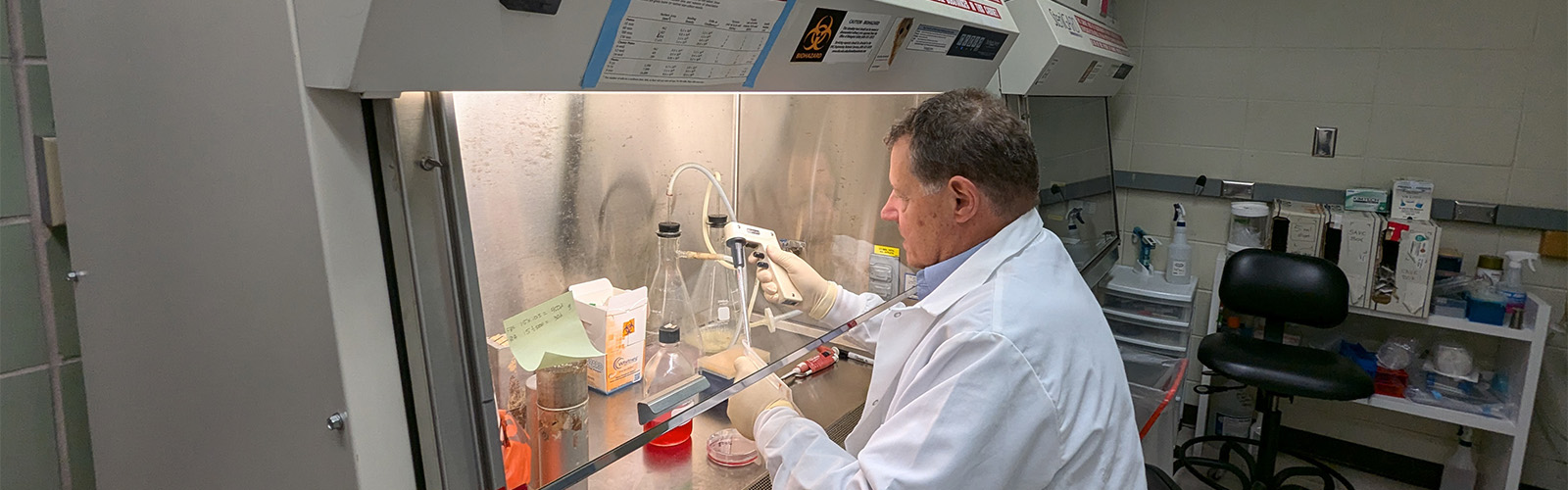
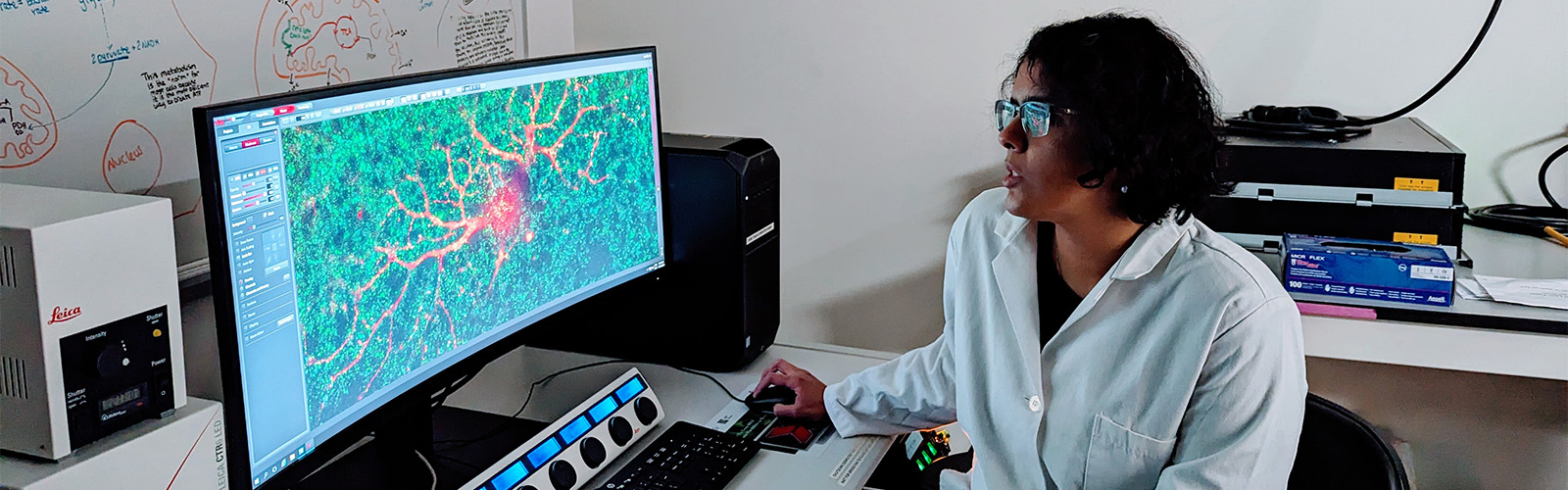
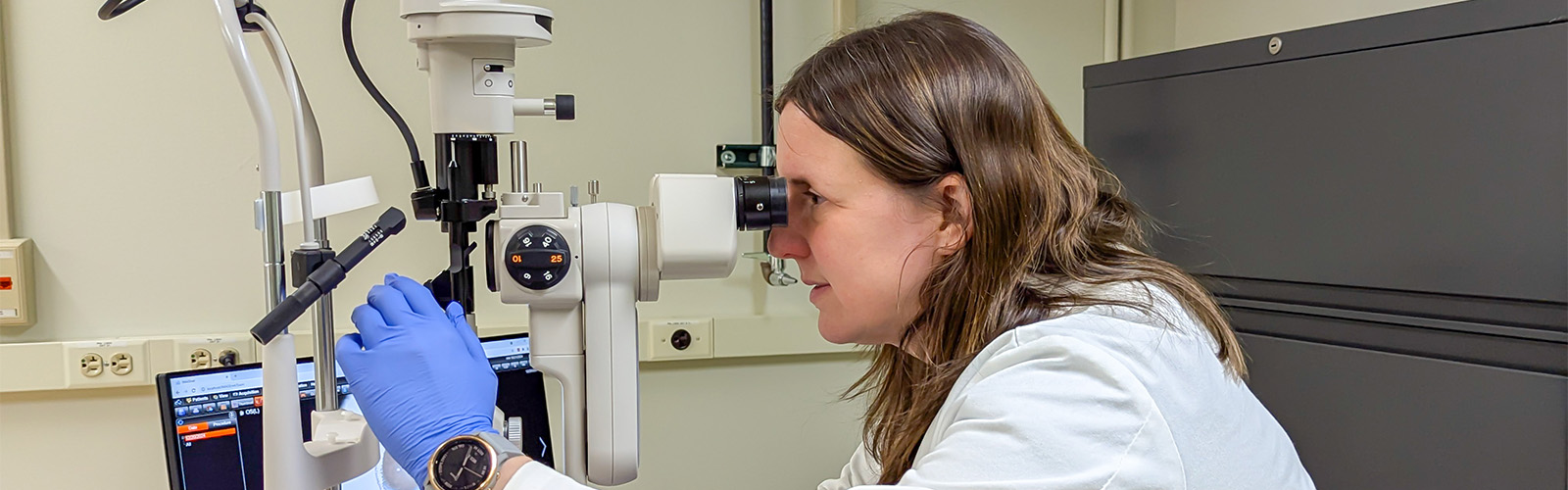
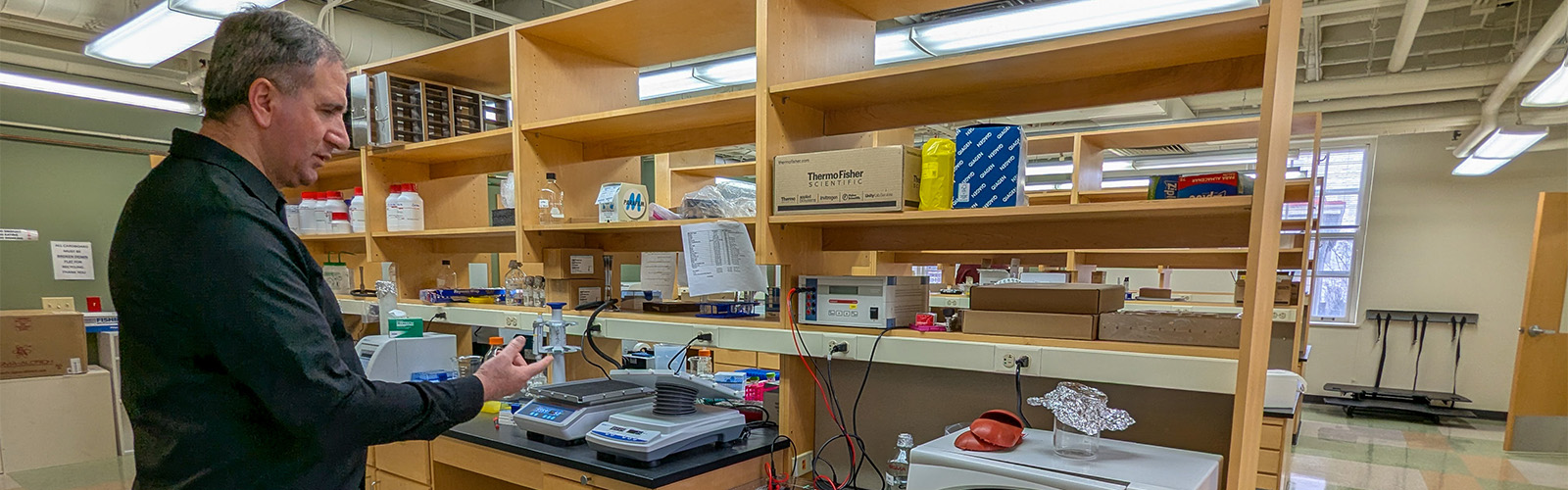
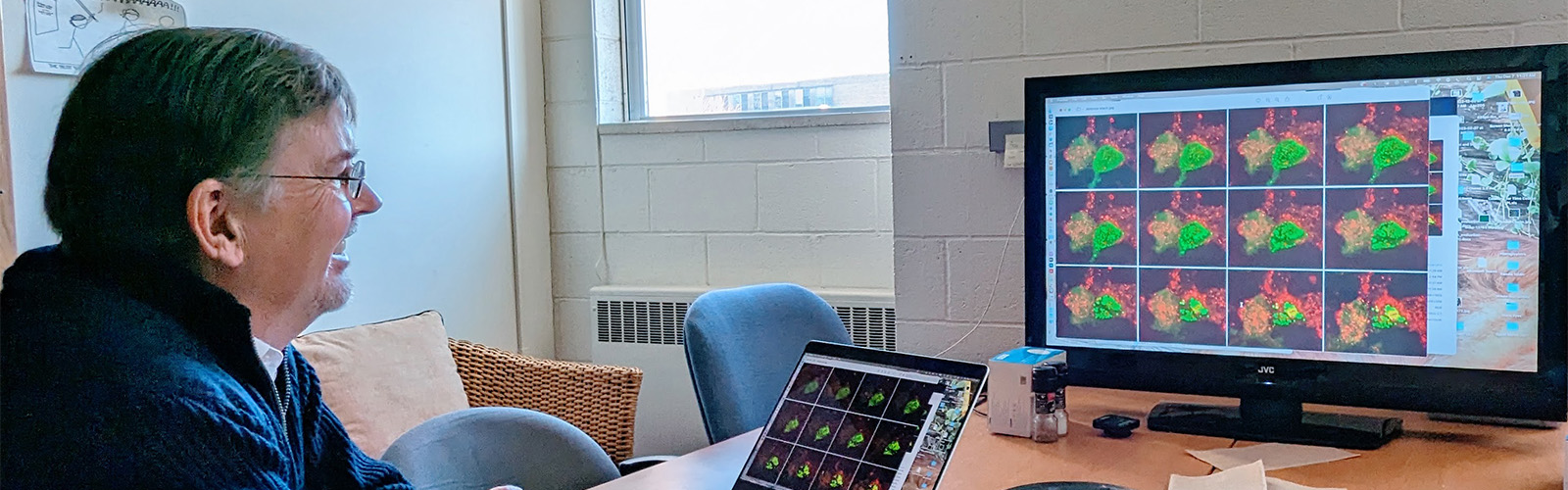
The Department of Ophthalmology and Visual Sciences is dedicated to providing researchers with the support they need to conduct excellent research. With a wide array of resources at your disposal, including tools, documents, and expert contacts, we’re committed to empowering your research endeavors. Whether you’re exploring innovative treatments, unraveling the complexities of eye diseases, or advancing technologies in vision care, we’re here to assist you.
DOVS Research Administration

Christina Thomas-Virnig
Credentials: PhD
Position title: Director of DOVS Translational Research
Email:
clthoma1

Inna Larsen
Position title: Multi-Functional Research Administrative Manager
Email:
ivlarsen

Vaqar Adhami
Credentials: PhD
Position title: Multi-Functional Research Administrator
Email:
vmadhami
Grant Proposal Submission
Please use the Grant Proposal Submission Form to initiate the process. This form will ask for basic information that will assist Vaqar and Inna with the creation of the budget, WISPER, and/or Cayuse record, or any other forms required by the sponsor. Please have the form submitted at least 10 business days prior to the due date to provide enough time for SMPH and RSP to approve the proposal.
Funding Opportunity Announcements: September 2026
(For a full listing of funding opportunities, please see the Funding Opportunities and Resources Database linked below)
New Opportunities
Amount |
Due Date |
Sponsor |
Title |
Description |
Application Link |
|
| $100,000 per year up to three (3) years. | Letter of intent: October 8
Application: February 27 |
Foundation Fighting Blindness | Individual Investigator Research Award | Individual Investigator Research Awards are designed to concentrate research in areas with the greatest potential to move toward treatments and cures for the inherited orphan retinal degenerative diseases and dry age-related macular degeneration.
Individual Research Awards are available in the following Research Priority Areas: Genetic Technologies |
Individual Investigator Research Award (IIRA) — Foundation Fighting Blindness | |
| The award will provide $80,000 per year for two (2) years. | Letter of intent: October 8
Application: February 27 |
Foundation Fighting Blindness | Postdoctoral Fellowship Award | The Foundation Fighting Blindness (FFB) expects to fund a limited number of Postdoctoral Fellowship Awards to be awarded in July 2026. The award will be approximately $80,000 per year for a period of two years. The Postdoctoral Fellowship Award is intended to support the training of postdoctoral fellows engaged in innovative research projects focused on inherited retinal degenerations (IRD) and dry age-related macular degeneration (dAMD).
The Foundation Fighting Blindness has identified six Research Priority Areas that align with its mission. This targeted open call for proposals is to address specific gaps identified in current retinal disease research. |
Postdoctoral Fellowship Award — Foundation Fighting Blindness | |
| $50,000 per award | Application period opens: Friday, August 28th, 2026
Application deadline: Friday, November 13th, 2026 at 11:59pm CST |
McPherson Eye Research Institute | Grant Accelerator Award | To be eligible to receive a Grant Acceleration Program Award, you must…
• …be a McPherson ERI member at UW-Madison. • …be faculty, a permanent principal investigator, or have limited PI status. • …be proposing a project where there is no overlap in budget line items from any other internal or external grant mechanism during the award period (although other support can be used to complement the proposed activities on this project). If budgetary overlap occurs after the project is awarded, the investigator must report it promptly to the McPherson ERI Center Administrator. Of note, submission of outside grant applications that utilize data obtained with GAP Award funds is highly encouraged. • …plan to use the award within one year of the month that you received it. Funds remaining one year after issuance of the award will be retained by the Institute unless a one-year no cost extension is granted. • …not have received a GAP award in the previous academic year. |
Grant Accelerator Program (GAP) Awards | |
| $1,500 | October and February
Application deadline: Tuesday, October 8, 2026 |
McPherson Eye Research Institute | Walsh Research Travel Awards | These $1500 awards, supported by the David G. Walsh Research Fellowship Fund, provide support for MERI trainees to attend conferences in their field. Four awards are given annually; two each Fall, and two each Spring. | https://vision.wisc.edu/funding_opportunities/david-walsh-travel-awards/#DWTA-Eligibility-target-element | |
| October
Application period opens: Wednesday, September 9, 2026 Application deadline: Friday, October 23, 2026 |
McPherson Eye Research Institute | Kenzi Valentyn Vision Research Awards | To be eligible to receive a Kenzi Valentyn Vision Research Grant, you must…
• …be a graduate student, postdoctoral researcher, medical or veterinary student who has status as a McPherson ERI trainee member (if you are not already a trainee member, please submit a trainee membership application along with your award application. Further information about MERI membership is available here.) • …be currently working in a McPherson ERI member’s lab/mentored by a McPherson ERI member at UW. • …be seeking funding for a vision research project • …plan to use the award within one year of the month that you received it. Carryover of an unused award is not permitted. (If for any reason a recipient is unable to use their award within the allotted time, that recipient must notify McPherson ERI administration so that the award can be extended to another qualified applicant.) • …not have already won a Kenzi Valentyn Award while in your current training period (e.g., graduate school training, postdoctoral fellowship, etc.). However, you are allowed to re-apply for this award if you won it while in a previous training period (e.g., you won as a graduate student, but you are now a postdoc). • …agree to present your award-supported project at a McPherson ERI-sponsored event (e.g., our monthly seminar series or our Fall poster session) within 1–2 years of receiving your award. |
https://vision.wisc.edu/funding_opportunities/kenzi-valentyn-awards/#up to $7,500 for one yearKVA-Overview-target-element |
Upcoming Deadlines
Amount |
Due Date |
Sponsor |
Title |
Description |
Application Link |
| Award amounts vary greatly from approximately $7,200, to $88,000. | August-September annually
The Fall Research Competition application opens on August 17, 2026 at 8 a.m. and closes on September 4, 2026 at 4:30 p.m. |
Office of the Vice Chancellor for Research | Fall Research Competition | This competition is for tenured professors and associate professors, tenure-track assistant professors, and permanent PIs at the University of Wisconsin–Madison.
An important goal for the Fall Research Competition is that OVCR investments lead to external funding in disciplines where that is possible. Faculty and permanent PIs are encouraged to submit proposals that serve as backup support for external grant applications. Alternatively, funding may be requested for pilot studies in new research directions, with the goal of developing preliminary data that will increase the likelihood of competitive extramural support. |
https://research.wisc.edu/funding/fall-competition/ |
| Travel expenses for annual AUPO meeting and $500 cash award | Nominations are due September 15 | Association of University Professors of Ophthalmology (AUPO) | Resident and Fellow Research Forum | The AUPO/RPB Resident and Fellow Research Forum was established through a grant provided by Research to Prevent Blindness (RPB). The AUPO believes strongly that skills learned by participating in research are an invaluable component of the education of an ophthalmologist. The establishment of the Resident and Fellow Research Forum acknowledges the importance of research in ophthalmic education and is intended to encourage the most promising house officers to pursue a career in academic ophthalmology and vision research. Through this forum AUPO promotes excellence in research by residents and fellows and identifies and supports individuals considering a career in ophthalmic research. | Resident and Fellow Research Forum – Association of University Professors of Ophthalmology |
| $10,000 for one year | September 15 | The Glaucoma Foundation | RPB Research Fellowship | The TGF (sponsored by Patricia Hill) / RPB Fellowships in Glaucoma provide one-year $10,000 fellowships focused on substantive glaucoma research, including investigation into the etiology, diagnosis and/or treatment of glaucoma, to current ophthalmology fellows with an MD, MD/PhD, PhD or other relevant degree. | Grant Application and Information – The Glaucoma Foundation |
| The maximum allowable funding for the entire period of performance is $15.0M for total costs. o Only $8.0M is currently available with FY26 funds; additional costs supported as optional research efforts. •Maximum period of performance is 4 years. |
Pre-Application (Preproposal): July 23, 2026 5:00 p.m. Eastern time Application: September 22, 2026 11:59 p.m. Eastern time |
Department of the Army | Platform Cinical Translation Award | Supports the translational development and/or early-phase clinical trials for broadly applicable clinical technologies that will address urgent and complex needs related to two FY26 PRMRP topic areas. | Platform Clinical Translation Award |
| The maximum allowable funding for the entire period of performance is $800,000 for total costs for Planning Phase. •Maximum period of performance is 12 months.All Funding Levels: •Maximum period of performance is 4 years. |
Pre-Application (Preproposal): July 23, 2026 5:00 p.m. Eastern time Application: September 22, 2026 11:59 p.m. Eastern time |
Department of the Army | Clinical Trial Award | Supports the rapid execution and analysis of clinical trials with the potential to have a significant impact on the treatment or management of a disease or condition addressed in one of the FY26 PRMRP topic areas and one of the FY26 PRMRP strategic goals. | Clinical Trial Award |
| Award Amount: $150,000
Duration: 2 years |
Full Proposal opens: June 25
Deadline: September 24 |
BrightFocus Foundation | National Glaucoma Research Program Grants-Standard Award | The standard award provides significant funding for researchers who have already generated some amount of preliminary data, but are often required to demonstrate additional, significant progress before they can apply to governmental or industrial funding agencies. | National Glaucoma Research Request for Proposals |
| $100,000 for two years | Application Opens: August 1, 2026
Application Closes: October 1, 2026 |
Association for Research in Vision and Ophthalmology (ARVO) | Genentech Career Development Award for Underrepresented Minority Emerging Vision Scientists | The Genentech Career Development Award for Underrepresented Minority Emerging Vision Scientists provides research funding to early-career underrepresented minority (URM) investigators who have received their initial faculty appointment and are working to establish an independent vision research program. | The Association for Research in Vision and Ophthalmology (arvo.org) |
| $100,000 | Application Opens: August 1, 2026
Application Closes: October 1, 2026 |
Association for Research in Vision and Ophthalmology (ARVO) | Dr. David L. Epstein Award | Eligible applicants include ARVO members who are well-established, senior-level investigators with documented history of conducting eye and vision research in glaucoma and who have a record of successfully mentoring clinician-scientists to independent academic and research careers. The award will fund a research project that supports the applicant’s mentee in the applicant’s lab. | The Association for Research in Vision and Ophthalmology | Dr. David L. Epstein Award (arvo.org) |
| $30,000 | Application Opens: August 1, 2026
Application Closes: October 1, 2026 |
Association for Research in Vision and Ophthalmology (ARVO) | Foundation Research Catalyst Awards | The ARVO Foundation Research Catalyst Awards are intended for investigators beginning their careers or returning to the workforce after an extended leave. The goal of this award is to support an initial research project for an investigator with a superb research idea. | The Association for Research in Vision and Ophthalmology | ARVO Foundation Research Catalyst Awards |
| $10,000 | Application Opens: August 1, 2026
Application Closes: October 1, 2026 |
Association for Research in Vision and Ophthalmology (ARVO) | Bert M. Glaser, MD Award for Innovative Research in Retina | This award is given to an early-career investigator in recognition of the discovery of a drug or technique, or the understanding of a mechanism of disease, that is novel and has profoundly changed our understanding and/or treatment of a retinal disease or condition. The discovery must have taken place within five years of the date of application. | The Association for Research in Vision and Ophthalmology | Bert M. Glaser, MD Award for Innovative Research in Retina (arvo.org) |
| $10,000 | Application Opens: August 1, 2026
Application Closes: October 1, 2026 |
Association for Research in Vision and Ophthalmology (ARVO) | Point of View Award | The Point of View Award recognizes an outstanding scholarly article published in a high-impact peer-reviewed journal during the previous calendar year related to efforts to restore vision through regenerative ophthalmology, biotechnology, whole eye transplantation or other approaches to the stated problem. | The Association for Research in Vision and Ophthalmology | Point of View Award (arvo.org) |
| $12,000 | Application Opens: August 1, 2026
Application Closes: October 1, 2026 |
Association for Research in Vision and Ophthalmology (ARVO) | Carl Camras Translational Research Awards | This award for young investigators working in areas of translational research honors Dr. Carl Camras, who is highly respected for his work as a glaucoma specialist and a research scientist. He is most widely recognized for developing prostaglandin analogues for the treatment of elevated IOP in patients with glaucoma. During his distinguished career, he took a personal interest in developing the next generation of eye and vision researchers.
Eligible nominees include young researchers who are 45 years of age or less at the time of nomination. Eligible nominees will have exhibited excellence in research and their fundamental scientific discoveries, concepts and novel technologies. Their discovery or observation must have led to, or have the promise of leading to, clinical application. |
The Association for Research in Vision and Ophthalmology | Carl Camras Translational Research Awards (arvo.org) |
| $30,000 honorarium | Application Opens: August 1, 2026
Application Closes: October 1, 2026 |
Association for Research in Vision and Ophthalmology (ARVO) | Kreissig Award for Excellence in Retinal Surgery | This award, established by Ingrid Kreissig, MD in 2020 with an endowment through the ARVO Foundation, recognizes the next generation of curious, enterprising investigators who seek to optimize functional outcomes for patients needing retinal surgery.
The purpose of the award is to recognize investigators who have expanded or enhanced scientific knowledge related to the understanding of: a) The rationale and mechanisms for a minimal approach in retinal surgery b) An innovative surgical approach to retinal disease c) The functional results after the newly developed retinal surgery |
The Association for Research in Vision and Ophthalmology- Kreissig Award for Excellence in Retinal Research |
| $50,000 | Application period opens: Friday, August 28th, 2026
Application deadline: Friday, November 13th 2026 |
McPherson Eye Research Institute (MERI) | Grant Accelerator Program | awards to broadly support vision research at UW-Madison, as well as one additional $50,000 AMD GAP award specifically designated for research in age-related macular degeneration (AMD). To be considered for one of these awards, you must (i) be a McPherson member at UW-Madison and (ii) be faculty, permanent principal investigators, or have limited PI status (see complete eligibility criteria here). | https://vision.wisc.edu/funding_opportunities/grant-accelerator-program/ |
Ongoing Opportunities
Amount |
Due Date |
Sponsor |
Title |
Description |
Application Link |
| Maximum Award $2500 | Quarterly Deadlines: January 1, April 1, July 1, and October 1 | Education Working Group (EWG) | Learner Travel Grant | Each laboratory or research unit may only receive one travel award per year. Scientists, post-doctoral fellows, and graduate students are eligible. The abstract of the presentation must be included and evidence of acceptance for presentation must be provided. | contact bgodin@wisc.edu for application |
| Up to $10,000 | accepted year-round | McPherson Eye Research Institute (MERI) | Grant Summit Program | The Grant Summit Program (GSP) was created to increase support for UW–Madison vision research by facilitating successful resubmissions of federal grant applications by McPherson ERI investigators. |
MERI-Member-Grant-Summit-Program-.pdf |
| Up to $1000 | accepted year-round | EMDR Research Foundation | Research Consultation Awards | Research consultation awards of up to $1,000 are available for clinicians, post-doctoral students, or university faculty interested in conducting research on EMDR and disseminating findings to the practice and scientific communities. The purpose of this award is to facilitate access to required expertise that would advance the development of an EMDR research project, to support the completion of an EMDR research project underway, or the writing of an article on EMDR for publication in a professional journal. | Research Consultation Awards | EMDR Foundation |
| Up to $1000 per award | accepted year-round | EMDR Research Foundation | Research Dissemination Travel Awards | The EMDR Research Foundation offers a travel award of up to $1,000 to support the dissemination of research findings by clinicians, doctoral students, or university faculty presenting their research at local, national and international non-EMDR professional meetings. The travel award must be applied for and awarded prior to meeting attendance. The funds will be distributed after the meeting upon submission of the required documentation. | Research Dissemination Travel Award | EMDR Foundation |
| Awards are up to $200,000 over up to two years and are non-renewable | Open Application | Partnership Education and Research Committee | Opportunity Grant | The University of Wisconsin School of Medicine and Public Health (SMPH) is home to the Wisconsin Partnership Program (WPP), a grantmaking program within SMPH established as the result of a generous endowment gift from Blue Cross Blue Shield United of Wisconsin. The Wisconsin Partnership Program is committed to improving health and advancing health equity through investments in community partnerships, education and research. | Opportunity Grant Program |
| The maximum budget is $100,000 per year for the two- and three-year research grants.
Grants-in-Aid are awarded for a one-year period and do not exceed $30,000. |
rolling | Whitehall Foundation | Research Grants
Grants in Aid |
Research Grants Research grants are available to investigators that meet all of the Foundation’s eligibility requirements and are working at accredited institutions in the United States. Applications will be judged on the scientific merit and the innovative aspects of the proposal as well as on the competence of the applicant. Research grants of up to three years will be provided. A renewal grant with a maximum of two years is possible, but it will be awarded on a competitive basis. Research grants will not be awarded to investigators who have already received, or expect to receive, substantial support from other sources, even if it is for an unrelated purpose.Grants-in-Aid The Grants-in-Aid program is designed for researchers at the assistant professor level who experience difficulty in competing for research funds because they have not yet become firmly established. Grants-in-Aid can also be made to senior scientists. All applications will be judged on the scientific merit and innovative aspects of the proposal, as well as on past performance and evidence of the applicant’s continued productivity. |
Whitehall Foundation: Basic Research in Vertebrate and Invertebrate Neurobiology |
| varies by award | rolling | Congressionally Directed Medical Research Programs | Vision Research Program | The FY26 Defense Appropriations Act provides funding for the VRP to support innovative, high-impact research with clinical relevance that will target the various causes, effects and treatment of visual injury resulting from exposures to the elements during combat operations and damage from explosive devices. As part of the DHA R&D-MRDC, the CDMRP is the program office managing these anticipated FY26 funding opportunities.
The VRP provides the information in this pre-announcement to allow investigators time to plan and develop ideas for submission to the anticipated FY26 funding opportunities. Investigators should not construe this pre-announcement as an obligation or promise by the government. The CDMRP will post FY26 VRP funding opportunity announcements on the Grants.gov website. Once released, the funding opportunity announcements will include pre-application and application deadlines. Applications submitted to the FY26 VRP must address one or more of the following focus areas: Understand and treat eye injury or visual dysfunction as related to military exposure |
Congressionally Directed Medical Research Program |
| Awards are up to $200,000 over up to two years and are non-renewable. Opportunity awards are not common. PERC anticipates funding one or two projects each calendar year depending on the availability of funds. | rolling | Wisconsin Partnership Program | Opportunity Award |
Through the Opportunity Grant Program — designed to be strategic, flexible and timely — the Partnership Education and Research Committee (PERC) provides essential one-time start-up funding to rapidly establish time-critical, high-profile, high-impact, state-of-the art education and research projects to address Wisconsin’s most pressing and complex health challenges. Opportunity Grants support groundbreaking research and education projects that fulfill one or more of five criteria:
|
Opportunity Grant Application Guidelines – Wisconsin Partnership Program |
Funding Opportunities and Resources Database
Explore our curated spreadsheet containing a comprehensive list of available grants, providing a valuable resource for researchers seeking funding opportunities.
Research Interest Directory
Meet our researchers, collaborators, and affiliates by exploring their research specialties in our 2025 Research Interest Directory.
Faculty Award Opportunities
The Award opportunities listed here are not intended to be an exhaustive list but are Awards that SMPH and the Dean’s office views as high value opportunities.
Biostatistical Consulting
Biostatistical analysis enhances the robustness of research findings and should be employed for all types of research studies, including, but not limited to, basic, clinical, and population studies. Statistical consultation is especially valuable during the planning stage of a research study or a proposal for extramural funding. Powered studies are also now a requirement for both IRB applications and internal applications for gift funds appropriated through Funds Distribution Committee. The appropriate analyses provide a level of integrity and validity to research that strengthens the resulting findings enabling their acceptance by the biomedical community.
Two methods of biostatistical consulting are available:
1) In-house biostatistical consulting
Kyle Peterson
Biostatistician
kdpeterson4@wisc.edu
2) Institute for Clinical and Translational Research (ICTR)
- Services through ICTR are provided by the Department of Biostatistics and Medical Informatics (BMI). It is the policy of the Department of BMI that a request for biostatistics consultation must be made at least (3) weeks in advance of any grant, abstract, poster, or analysis deadline. For large grant submissions, like an R01, at least four (4) weeks’ notice is preferred.
Services Provided:
Consultation/collaboration in the planning, design, conduct, and analysis of clinical/translational research.
The initial consultation is free of charge. Fees may be project dependent. Please inquire upon consultation whether fees will be incurred for your project.
DOVS Funding Resources and Funds Distribution Committee
This is an accordion element with a series of buttons that open and close related content panels.
Funds Distribution Committee
The Funds Distribution Committee (FDC) provides recommendations to the Department of Ophthalmology and Visual Sciences (DOVS) Chair regarding distribution of awarded and garnered funds from the UW Foundation, WARF, SMPH, and outside donations provided to the Department. From 2018 to 2023, FDC has awarded nearly $1.5 million in funding, with significant contributions from partners like the Lions Eye Bank of Wisconsin. Funds support medical student and resident research projects, international training opportunities, and faculty research and equipment. There are also designated funds for research in AMD, diabetic retinopathy, glaucoma, and cornea research. FDC documents can be found on the intranet and more information can be found below.
Unless otherwise indicated, deadlines for submission to the FDC are two weeks prior to each meeting. Specific deadlines can be found on the intranet. From time to time other funding opportunities may occur that do not adhere to FDC deadlines. In this event, an email announcing specifics for the funding opportunity will be sent to all faculty, staff and learners.
Please note that specific travel funds for fellows are available through each fellowship specialty. Contact the fellowship advisor for more information.
In general, faculty should realize that these mechanisms can support one student researcher per faculty member per year, so mentors should prioritize requests for student research funding support.
Completed applications for any of the opportunities listed above should be emailed to Kristen Rogers, financial specialist, unless otherwise indicated in the application instructions.
DOVS Research Travel Award Program
The Education Working Group has authorized 3 travel awards per year to basic science graduate students, post-doctoral fellows, and scientists in DOVS of up to $2,500.00 each. Please note that the applicant must be presenting at the meeting so you must include a copy of the abstract in the application. Applicants must also provide proof that the abstract has been accepted for presentation. An application can be submitted without proof of acceptance, but this must be provided prior to any funds being released. A letter or statement of approval must also be included from the mentor.
There are 4 deadlines per year that were set based on the timing of major meetings (ARVO, Cell Biology, Society for Neuroscience etc.). Many meetings or societies provide travel grants for trainees so if an applicant receives a travel award from the meeting organizers or some other entity then the DOVS travel grant should be returned so we can fund another applicant. If you have questions, please contact Dr. Brandt. When submitting applications please remember that RWG will need some time to review them and have the funding enabled so avoid last-minute submissions.
Research Project and Equipment Purchases
All request forms are available in the Ophth Document Library (ODL) on the DOVS intranet, under the Funds Distribution Committee category. Use this form to request funds for research projects involving faculty or learners and/or equipment purchases.
Support for Medical and Undergraduate Student Research
Please read over Support for Medical Student Research, which can be found on the DOVS intranet and explains various funding opportunities. Please note that it is expected that any faculty member wishing to mentor a medical student research project should provide supporting funds from their own resources. If matching funds by a faculty member are not available, DOVS mentors may seek matching funds using several mechanisms.
Research Units and Resources
This is an accordion element with a series of buttons that open and close related content panels.
Practical Resources for the Research Process
Compliance, Protocol, and Safety-Related Training Requirements
A comprehensive list from UW Madison of all trainings for PIs and all staff on protocols.
medRISE (Research Investigator Support and Education)
Biotechnology and Graduate Studies has created this service to assist with the planning, development, and administration of competitive grant proposals.
New Faculty Guide to Competing for Research Funding
While this book is written with new faculty in mind, the content provides information useful to research administrators. To locate, go to the External Resources dropdown and click on “New Faculty Guide to Competing for Research Funding.”
Outside Activities Disclosure
Outside Activities Disclosure needs to be filled out annually by all UW faculty.
PI Obligations Under Research
Outlines the responsibilities of PIs to rights of invention/intellectual property.
Research Information for PIs
Updates and resources on University-wide research
Policy on the Tangible Research Property
Document that outlines the University’s policy on the ownership, access and distribution of tangible research property.
RAMP – Research Administration Management Portal
RAMP is a comprehensive research administration system that supports the entire research lifecycle, from proposal development and submission to award management and closeout.
Research Data Services (RDS)
Research Data Services (RDS) is a free resource for anyone on the UW-Madison campus that provides consultations, best practice information, and education and training on research data management and sharing.
Research and Sponsored Programs (RSP)
The RSP page has guidance on routing and the award lifecycle.
RSP – Effort Reporting and Certification
Information for Effort Reporting through the Employee Compensation Compliance System (ECC).
RSP – Frequently Needed Data
RSP’s Frequently Needed Data has relevant information for your research needs.
RSP Rates
RSP Rate Page has a list of F&A and Fringe Benefit Rates.
Researcher Toolkit
The Researcher Toolkit is a resource for UW-Madison faculty, staff, and student researchers that points to helpful resources for each phase of your research project.
Shapiro Summer Research Program
The program is designed to educate students about the process of scientific research and to develop skills in research study design, methodology, statistical analysis and presentation of findings. Past lecture recordings are available on the site.
SMPH Grant Writing Seminar Series
In conjunction with the University of Wisconsin School of Medicine and Public Health (SMPH) Office for Faculty Affairs and Development, the UW Department of Medicine contracts with Grant Writers’ Seminars and Workshops (GWSW) to provide virtual seminars on grant writing.
The Art of Grantsmanship
Guidelines on preparing grant applications from the moment of conception to submitting the final proposal.
Training Opportunities
Training opportunities for working in RAMP are offered on a regular basis by Research and Sponsored Programs and through the Graduate School Seminar Series.
UW SMPH: Building Research Skills
UW SMPH research-related resources to help faculty and staff navigate institutional policies and procedures, find required or recommended trainings, locate opportunities for funding, and learn about research management.
UW SMPH: MATRIX Mentoring Program
Mentoring to Achieve Research Independence (MATRIX) is an intensive 9-month mentoring program coordinated by the School of Medicine and Public Health (SMPH) and designed to help faculty members (mentees) successfully land their first National Institute of Health (NIH) R01 Research Project Grant or equivalent.
UW Writing Center Grant Writing Handbook
Helpful aid on grant writing from the UW Writing Center.
NIH/NSF Requirements
Biosketch and SciENcv–
The NIH is adopting the use of Common Forms templates in accordance with notice NOT-OD-26-018 ensuring compliance with the Guidance for Implementing National Security Presidential Memorandum 33. Use of the Common Forms for Biographical Sketch, Current and Pending (Other) Support and NIH Biographical Sketch Supplement will be required for application due dates and all JIT, RPPR, and Prior Approval submissions on or after January 25, 2026.
Note: Do not include any hyperlinks (e-mail or website) on any grant materials per NIH guidelines!
The Office of Training Grant Support has created a resource page with videos and tools to assist investigators with SciENcv setup and management.
SciENcv & NIH Biosketch Support Page
In addition, UW-Libraries has created a step-by-step guide on building a ScienCV profile and adding delegates to assist with document creation/management
SciENcv/Biosketches – Researcher Profile Guide – Research Guides at University of Wisconsin-Madison
Other Support-
Information on other active and pending support may be requested (often as part of Just-in-Time procedures for grant applications or in progress reports) to ensure there is no scientific, budgetary, or commitment overlap. “Other Support” is sometimes referred to as “current and pending support” or “active and pending support.” Find instructions, blank format pages, and sample Other Support documents here.
Note: Do not include any hyperlinks (e-mail or website) on any grant materials per NIH guidelines!
Annual Research Security Training for ALL KEY PERSONNEL is now required by NIH/NSF
-
-
The training takes about 1 to 1.5 hours
- To verify completion of the training search for your name at https://compliance.research.wisc.edu/Tilt
-
National Science Foundation (NSF) Update
On April 27, 2026, the NSF released a new tool within Research.gov to be used to create DMS Plans for proposals. Investigators should use this tool when submitting new proposals and refer to the instructions linked here on the Research.gov website.
National Institutes of Health (NIH) Update
For proposals on or after May 25, 2026, NIH is requiring a new format for Data Management and Sharing Plans (DMS Plans). NIH has updated instructions for the new format on their website and PIs should use their new ‘2026 Pilot DMS Plan Format Page‘, which is a Word document, linked within the NIH instructions page.
The DMS Plan should be included in the “Other Plan(s)” field on the PHS 398 Research Plan or PHS 398 Career Development Award Supplemental Form per the relevant application instructions. A brief summary and associated costs should still be submitted as part of the budget and budget justification.
Extramural Federal Funding Resources
Research funding dashboard available from AAMC: A new data dashboard has been developed by AAMC to help the academic medicine community track National Institutes of Health extramural funding activity during fiscal year 2026 by using publicly available NIH data. The dashboard tracks multiple indicators, including total awards, funding obligated, research training grants issued and the use of multiyear funding. It will be updated regularly to provide timely insights into NIH funding trends. The AAMC has also published a data brief that provides an analysis of emerging funding patterns in FY 2026. Additional data briefs will be published throughout the year to highlight insights from the data dashboard.
With the current federal transition, there have been changes to grant deadlines as well as the application process. Please see the links below for relevant updates:
Federal Updates – Federal Relations – UW–Madison
Federal Transition | Research & Sponsored Programs
398 Forms
398 forms and instructions for new grant applications can be found as paper copies of the instructions for NIH grants. It can be downloaded from this page.
About NIH Grants
Here is a guide from NIH that explains their grants and contracts.
Centers for Disease Control
Centers for Disease Control has many research funding opportunities available.
Electronic Research Admin (ERA)
ERA is the Office of Extramural Research that has infrastructure to manage grants awarded by NIH.
ERA Commons Login
The login should be used to access NIH grants.
National Eye Institute
The National Eye Institute houses a large number of links on grants and funding.
National Institutes of Health (NIH)
As America’s medical research agency, NIH supports research discoveries.
NIH and Federal Grant Links
Grants.gov is the U.S. government’s central website for funding opportunities through federal agencies.
NIH Funding
NIH Guide Funding Opportunities and Notices is an overview of NIH funding.
NIH RePORTER
NIH RePORTER is a query form to find the researcher or project you are looking for.
NIH Study Sections
The CSR Study Section Roster explains how applications are reviewed.
NSF Proposals
Research.gov is used in the preparation of NSF proposals.
Office of Extramural Support (OER)
The NIH OER has a great deal of information about grants, policy, and compliance.
Progress Reports
For Progress reports use the RPPR system. There are no paper forms for this process.
Resources and Programs for NIH Grant Applicants Infographic
The NIH information presented in this infographic was compiled through collaboration among a panel of sponsored research offices and principal investigators, and it was curated and approved by the Center for Scientific Review before dissemination to UW-Madison and other applicant institutions.
SF424
SF424 is an electronic application guide for NIH grants.
VA Office of Research
For information on research opportunities with William S. Middleton Memorial Veterans Hospital, call (608) 280-7007 or email VHAMADRDCOORDINATOR@va.gov.
Extramural Non-Federal Funding Resources
American Academy of Optometry
American Academy of Optometry supports optometric research and education to improve clinical patient care.
Association for Research in Vision and Ophthalmology (ARVO)
ARVO has research awards, grants, and fellowships.
BrightFocus Foundation
BrightFocus funds exceptional scientific research worldwide to defeat Alzheimer’s disease, macular degeneration, and glaucoma and provides expert information on these heartbreaking diseases.
Fight for Sight
Fight for Sight has supported millions of eye and vision research.
Foundation Fighting Blindness
Foundation Fighting Blindness hosts several research funding opportunities throughout the year.
Glaucoma Foundation
Glaucoma Foundation awards grants to researchers who seek innovative ways to improve the lives of those living with glaucoma.
Glaucoma Research Foundation
Glaucoma Research Foundation invests in research and education to find a cure for glaucoma.
Intelligent Research in Sight (IRIS)
IRIS Registry Data Analysis, part of The American Academy of Ophthalmology, is the world’s largest specialty clinical data registry. Four grants are provided each year.
Research to Prevent Blindness (RPB)
RPB funds high-performing departments of ophthalmology in the USA.
Retina Research Foundation
Retina Research Foundation funds a wide variety of scientific research including pilot study grants, ongoing research projects, and lifetime achievement awards.
Intramural Funding Resources
Community Academic Partnership Fund
One of the Wisconsin Partnership Program funds also strives to improve the health of Wisconsinites. Here are three community grants offered: Community Collaboration Grants, Community Impact Grants, and Community Catalyst Grants.
Faculty Grant Programs
These programs seek to alleviate issues affecting people in Wisconsin. The three programs that DOVS faculty can participate in are: Collaborative Health Sciences Program, New Investigator Program, and Opportunity Grants Program.
Health Innovation Program from UW SMPH
HIP partners UW faculty with organizations to advance health around the country.
Institutional Nominations and Competitions
Institutional nominations and internal competition occur within the Graduate School every year. There are a vast number of grants and programs with various deadlines.
Training Grants
The T32 Vision Research Grant within DOVS is a competitive grant supporting training of graduate students and post-doctoral fellows.
UW Institute for Clinical and Translational Research (ICTR)
Pilot funding through ICTR includes many award programs.
UW Research Funding
Intramural funding is provided by the Office of the Vice Chancellor for Research and Graduate Education.
Wisconsin Network for Health Research (WINHR)
WINHR is a partnership established to promote statewide research.
Wisconsin Partnership Program
The program seeks to improve the health and lives of people all over Wisconsin by investing in research, education, and community partnerships.
DOVS Research Units and Resources
2025 Research Interest Directory
A complete listing of our researchers, collaborators, and affiliates and their respective research specialties from our Biennial Research Retreat.
A-EYE Research Unit
Our A-EYE (Artificial intelligence/AI) unit uses neural networks to advance research on diseases like diabetic retinopathy and age-related macular degeneration. They support faculty, optimize clinical trials at the Wisconsin Reading Center, and forge industry partnerships.
Big Data Request
DOVS is now a member of the Intelligent Research In Sight consortium (IRIS). This form can be used to request access to the data from IRIS.
Clinical Eye Research Unit (CERU)
CERU, our primary clinical research team, collaborates on eye-related studies, including clinical trials initiated across UW–Madison’s School of Medicine and Public Health, extending to UW Hospital and Carbone Cancer Center.
Funding Opportunities and Resources Database
Our Research Administration maintains a comprehensive and live spreadsheet of grants available to our researchers.
Wisconsin Reading Center (WRC)
Wisconsin Reading Center (WRC), previously the Fundus Photograph Reading Center (FPRC), our core image reading lab specializes in diabetic retinopathy, age-related macular degeneration, uveitis, and various ophthalmic diseases. Founded on enduring principles of intellectual honesty, quality, relevance, innovation, and staff satisfaction, the WRC remains dedicated to advancing eye health research.
Vision Research Core
Vision Research Core provides researchers three distinct service areas: ocular omics/quantitative molecular biology; pathology and imaging; animal models and eye organ culture.
UW-Madison Campus Research Units and Resources
Biomedical Research Model Services (BRMS)
Formerly known as LAR, BRMS offers care for research animals to ensure quality experimental design.
Clinical Trials Institute
The Clinical Trials Institute has support services for clinical trials on a fee-for-service basis.
Cores and Resources
Cores and Resources is a search engine to help UW researchers find research equipment and other services.
Health Sciences Institutional Review Board (HS-IRB)
HS-IRB ensures that protocol is met in regards to research performed on humans.
ICTR Clinical Research Unit (CRU)
Formerly known as GCRC, the CRU performs studies initiated by investigators and industry.
Library Support for Open Access Publishing
The libraries currently have arrangements with select publishers to cover author publishing charges (APCs) for open access publishing by UW-Madison corresponding authors. These are called ‘Read and Publish’ or ‘Transformative’ agreements, and are often done in consortium with the Big Ten Academic Alliance (BTAA). Most agreements offer full coverage of APCs while others offer a discount.
Office of Biological Safety (OBS)
OBS ensures that safe laboratory procedures are followed for biological materials.
Office of the Vice Chancellor for Research and Graduate Education
UW-Madison’s graduate school is an excellent place to get involved with research and make it your primary focus.
Public Access Service
Here is a guide to public access to publications requirements.
Policies, Responsibilities, and Procedures
The Graduate School Office of Academic Services provides an overview of UW Graduate School guidelines.
Rabbit AI
UW–Madison’s research discovery tool that helps faculty and staff find potential collaborators, shared research interests, grants, patents, and sponsored projects across campus.
Research Animals Resources Center (RARC)
RARC provides resources for animals used in research activities.
Graduate Programs, Funding and Resources
Information on available programs and funding at UW Madison to help you determine your research focus.
School of Medicine and Public Health
DOVS is part of SMPH, seeking new approaches to investigate illnesses.
UW Biotechnology Center
The Biotechnology Center offers services for UW researchers, including providing them with technology and resources.
WARF Technologies
Wisconsin Alumni Research Foundation’s portfolio of over 2,200 patented technologies available for commercialization.
Wisconsin Discovery Portal
Wisconsin Discovery Portal is an excellent searchable database for all Principal Investigators at UW by topic, including a list of publications.