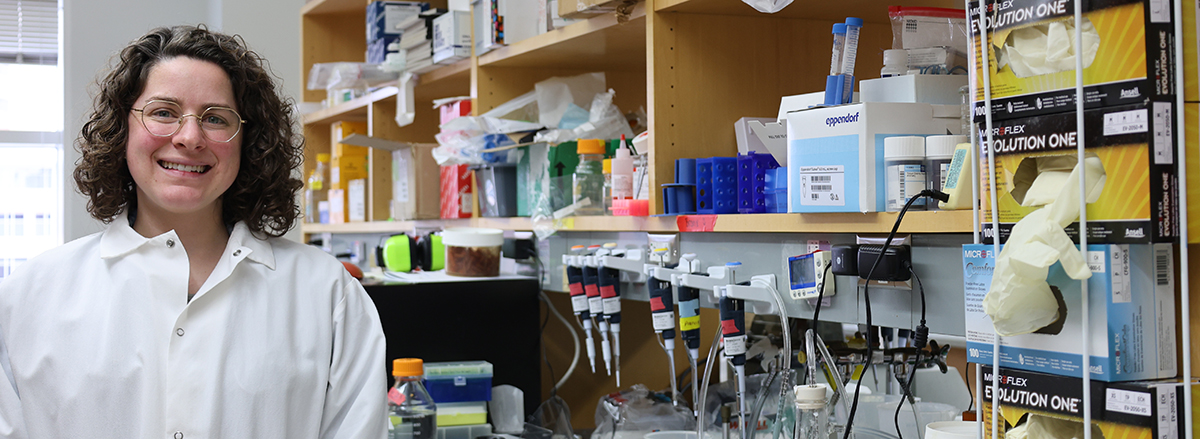
When you talk to Celia Bisbach about her research, the first thing you notice is her vibrant smile and the excitement in her eyes. The Jefferson, WI native is a post-doctoral researcher in the high-profile Gamm Lab at the University of Wisconsin—Madison, one of the world’s leading centers for stem cell–based vision research The lab is led by Dr. David Gamm, professor of ophthalmology and visual sciences and director of the McPherson Eye Research Institute, whose work has helped define the field.
Dr. Bisbach did not always envision a career in science. She originally planned to become a veterinarian. While completing her undergraduate degree at the University of Wisconsin—Madison, she worked in a cancer research lab caring for mice. As she began assisting with experiments, she realized she was more drawn to the science than to veterinary work.
She went on to earn her PhD in Biochemistry from the University of Washington in Seattle where her research focus shifted from cancer biology to vision science.
“It’s crazy that we can see,” Dr. Bisbach said. “When you think about how much detail you can perceive—and that it’s a cell that’s converting light to energy—it’s fascinating.”
Her graduate work explored how photoreceptor cells power that process. Today, she studies what happens when those cells fail—and how they might be repaired.
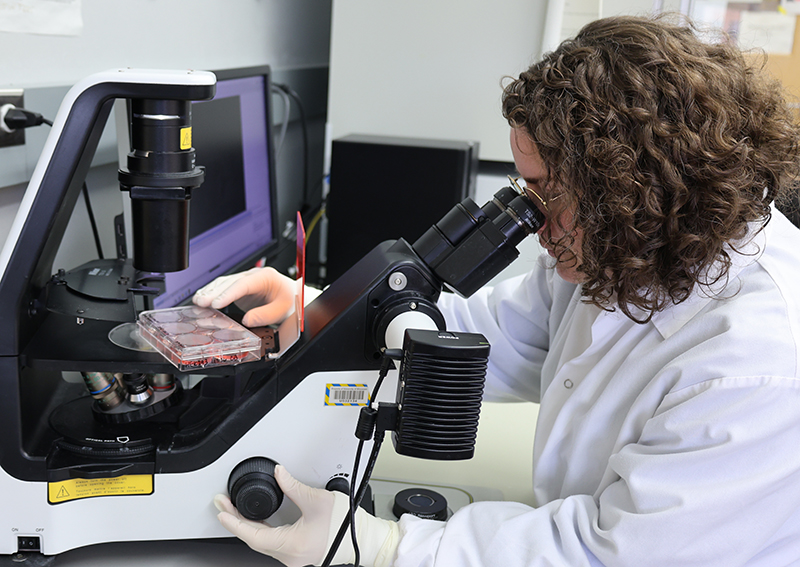
After completing her doctorate, Dr. Bisbach moved back to Wisconsin to be closer to her family. She worked for two years at a biotech firm. Although valuable, she realized she missed doing academic research. On the advice of her former PhD advisor, she reached out to Dr. Gamm.
“I applied for a scientist position in his lab, and he sent me the nicest rejection email I’ve ever gotten,” she recalled with a smile. But he invited her to talk further. “At the time I didn’t know who he was—how much he had accomplished. I just went off vibes. We talked on the phone, and the energy was great. I had a good feeling about it.”
She joined the Gamm Lab 2024.
Pursuing Answers to Complex Retinal Diseases
Dr. Bisbach’s current work spans two major projects. The first builds on an existing work exploring Usher Syndrome, a rare disorder causing combined deafness and blindness. She helped sustain the project by securing grant funding, a milestone she had set for herself as she considered a future leading her own lab.
Her second project draws directly from her industry experience. At her previous company, she supported teams developing therapeutics using targeted protein degradation—a strategy that hijacks the cell’s natural “garbage collectors” to remove harmful or misfolded proteins.
“In many diseases, misfolded proteins accumulate and clog up the cell,” she explained. “You can’t just inhibit a misfolded protein—it’s still there. But if you can recruit it to the cell’s waste‑disposal pathways, you can get rid of it.”
While this approach is widely explored in cancer research, Dr. Bisbach saw an opportunity to apply it to retinal disease. Her initial proof‑of‑concept work focuses on age‑related macular degeneration, testing whether targeted degradation could offer a new therapeutic strategy.
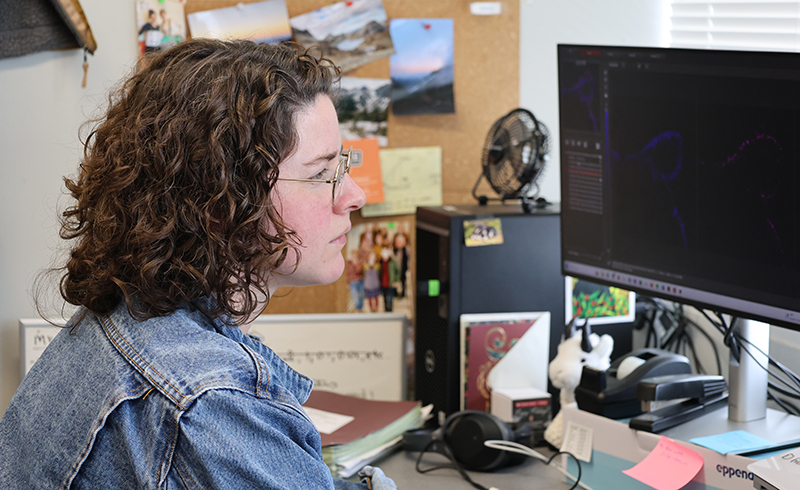
Looking ahead, she hopes to apply the strategy to inherited retinal conditions like retinitis pigmentosa caused by misfolded rhodopsin—a protein essential for photoreceptor function that becomes toxic when mutated.
“Dr. Bisbach’s work takes on some of the biggest issues in our field,” said Dr. Gamm. “She investigates how, at a basic science level, different retinal degenerative diseases ultimately lead to cell death and blindness. She then takes that knowledge and devises new or better therapies to safeguard those cells.”
Dr. Bisbach considers her biggest accomplishment launching that project, which she had been conceptualizing for more than a year—long before joining the Gamm Lab.
“I would wake up early, go to a coffee shop, and read and think for an hour,” she said. “Just planning how I would do it.”
Within two years of joining the Gamm Lab, she has made significant progress and secured funding to advance it further. The work was recognized with a prestigious Wisconsin Alumni Research Foundation Innovation Award in 2025.
Growing as a Scientist — and a Leader
Beyond the science, Dr. Bisbach is developing the skills required to run a research program: grant writing, project planning, resource management, and mentoring.
She is still discerning her long‑term path—whether she wants to lead a lab like Dr. Gamm or pursue a more hands‑on scientist role.
“People who run labs are very passionate,” she said. “At my industry job, I felt like something was missing, and I’ve been able to recapture that passion here. But I’m always paying attention to whether that feeling stays.”
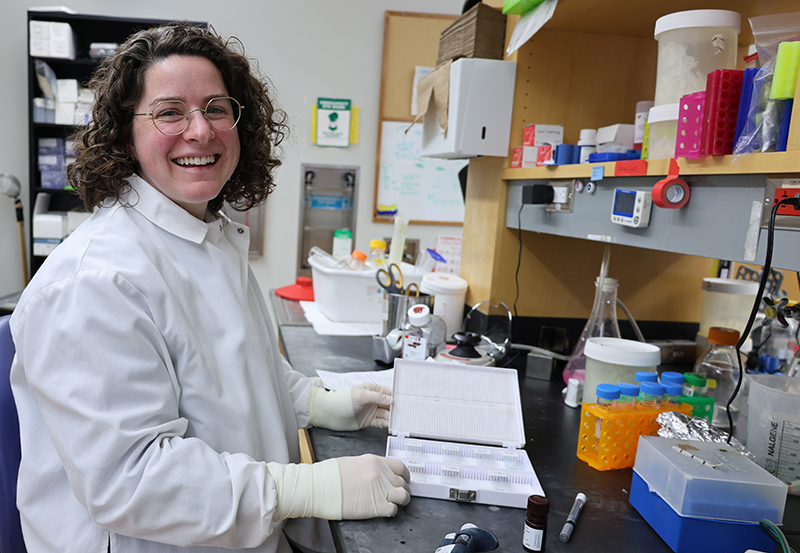
Her next major milestone is personal: she is expecting her first child in March. “It’s a very demanding job to be a principal investigator and run a lab,” she said. “There are many women who do that with families—it’s absolutely possible. But I need to look at what I want out of life as a whole.”
“Life is going to change,” she added. “We’ll see how the next year goes.”