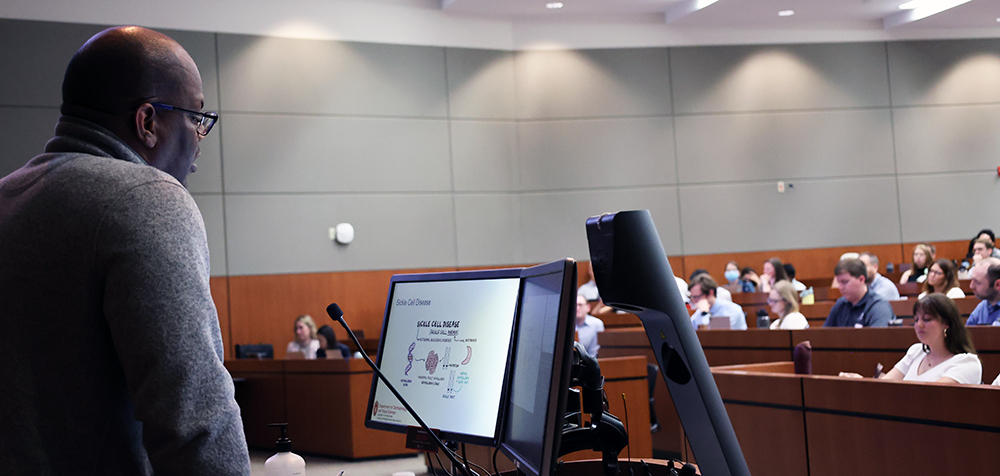
Research and evidence-based medicine are foundational to the practice of ophthalmology. At the University of Wisconsin Department of Ophthalmology and Visual Sciences (DOVS), residents are immersed in scholarly activity through a structured research curriculum designed to develop critical thinking, scientific inquiry, and lifelong learning skills.
The curriculum provides residents with mentorship, resources, funding opportunities, and protected research time to help them complete meaningful scholarly projects while preparing them for future careers as clinician-scientists and evidence-based practitioners.
The research experience begins during residents’ PGY-1 internship year, when they are introduced to the various opportunities available.
“At the start of their internship year, residents attend a special Grand Rounds session where faculty members present their research interests and potential project opportunities through a series of brief presentations,” explained Anna Momont, MD, vice chair of education and residency program director. “The session provides residents with exposure to a wide range of clinical and basic science research topics and helps them identify potential mentors whose interests align with their own.”
Following the session, PGY-1 residents meet with the department’s Resident Research Committee (RRC) to review program requirements and learn about the many resources available to support their scholarly work. These resources include access to a dedicated biostatistician, clinical trials infrastructure, a retinal image reading center, basic science laboratories, research administrators, and experienced faculty investigators.
Residents then select a faculty mentor and work closely with that individual to develop a research question and design a project that addresses a meaningful clinical or scientific problem. Once the project is approved by the RRC, residents become eligible for project funding and additional support to present their work at regional and national meetings.
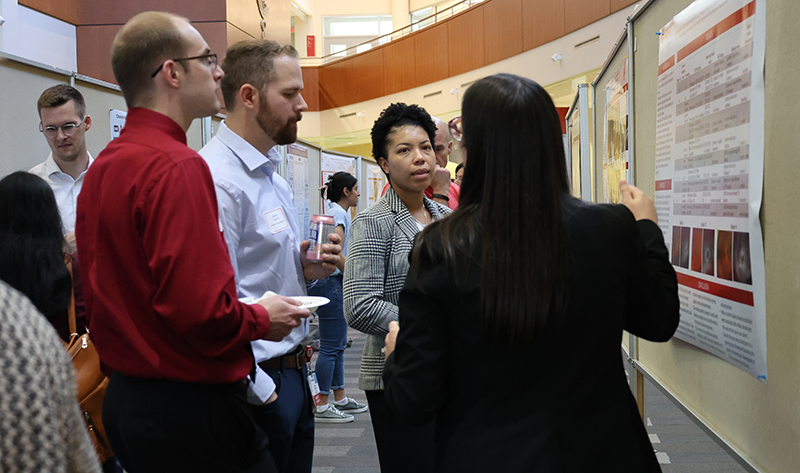
“The RRC serves as the backbone of the resident research program by overseeing the program, providing guidance, feedback, and mentorship throughout the research process while ensuring residents make meaningful progress toward project completion,” said Associate Residency Program Director Jonathan Chang, MD, who leads the RRC.
The committee includes residency program leadership, education and research administrators, and both clinical and basic science faculty representatives. Members meet monthly to review resident progress, provide feedback, and address challenges that may arise during the research process.
“We recognize that meaningful research requires dedicated effort,” said Dr. Momont. “To that end, DOVS provides protected research time throughout residency. This structured approach allows residents to advance their projects while balancing the demands of clinical training.”
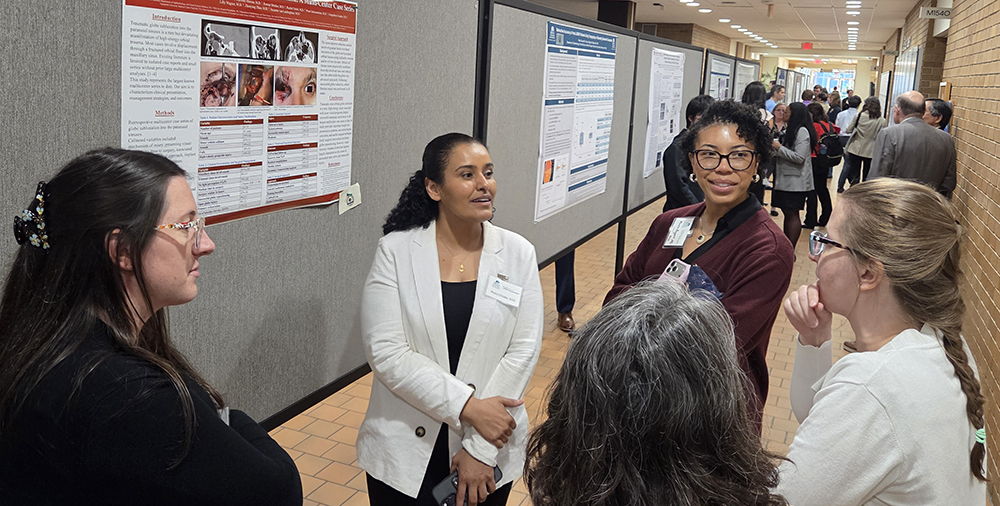
Ophthalmology residents receive about 5 weeks of dedicated research time spread over their three years of training.
The department continually evaluates and refines the curriculum through annual assessment measures, including mentor and resident surveys, formal proposal and progress presentations, conference abstracts, and peer-reviewed publications.