For Sanbrita Mondal, OD, FAAO, patient care and teaching have always gone hand in hand.
Whether she’s helping someone adapt to vision loss or mentoring the next generation of eye care professionals, her goal is the same: leave people better equipped than when they arrived.
Dr. Mondal is an optometrist at UW Health in Madison, WI and a clinical adjunct associate professor in the University of Wisconsin Department of Ophthalmology and Visual Sciences (DOVS). In June 2026, she was honored as the department’s Distinguished Community Educator.
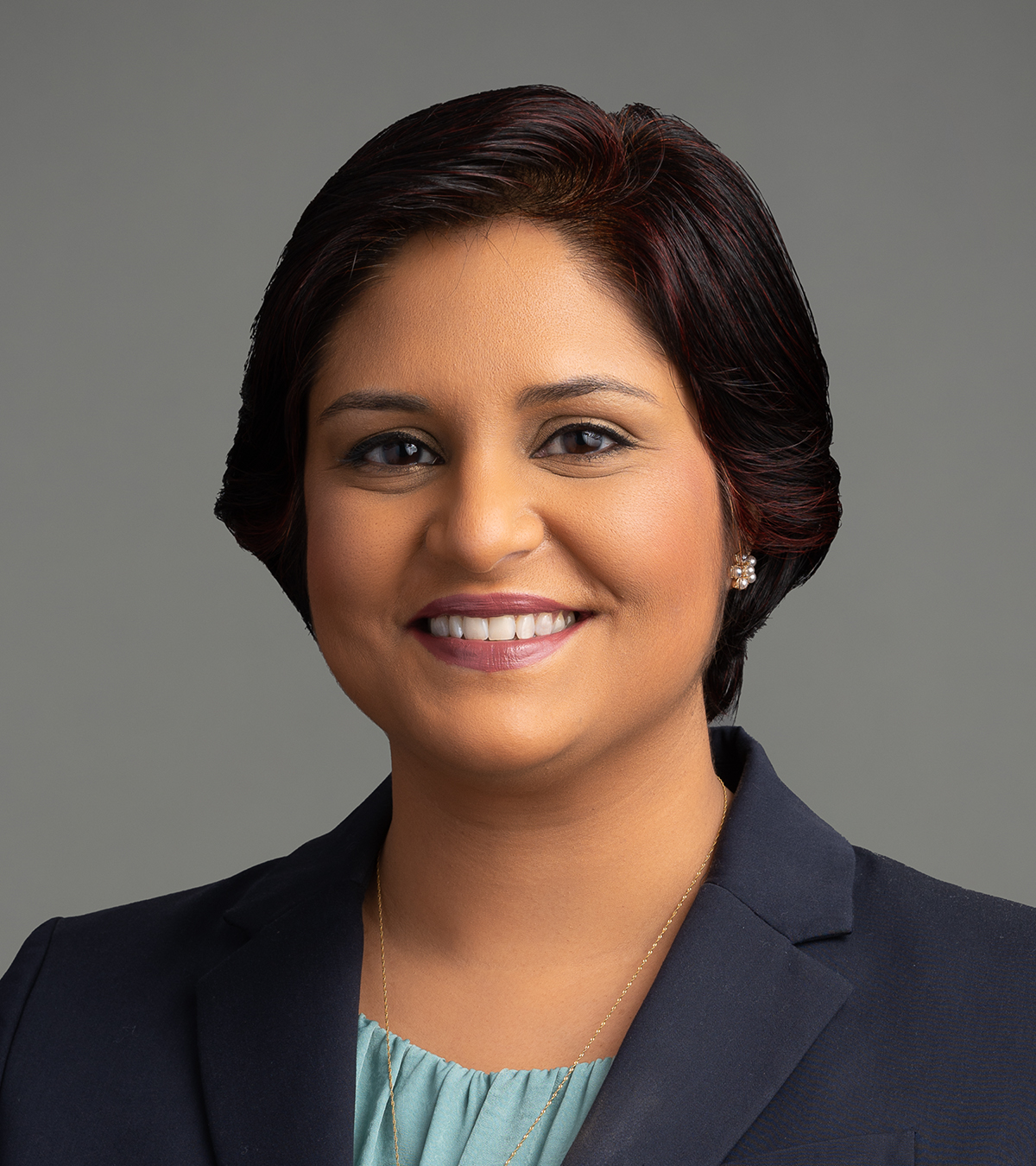
“I am deeply honored to receive this award,” Dr. Mondal said. “I like making connections to understand the individual behind the eyes. Every person’s visual needs are a puzzle we solve together. If I can help someone achieve even one important visual goal, that’s a win. When a patient leaves feeling more confident about living with the vision they have, I’ve accomplished something meaningful.”
Growing up in Connecticut, Dr. Mondal was introduced to the inner workings of the eye at an early age by her mother, a research scientist in the Department of Ophthalmology at Yale University.
“She studied the ciliary body-a part of the eye that produces the internal ocular fluid,” Dr. Mondal recalled. “During school breaks, I would watch her perform cow eye dissections. I thought it was beautiful, and I was drawn to eyes ever since. Surgery wasn’t for me, so optometry became the perfect fit.”
After graduating from the New England College of Optometry in Boston, MA in 2010, Dr. Mondal entered private practice while also teaching students at her alma mater. When she moved to Wisconsin with her family in 2012, she returned to private practice—but quickly realized something was missing.
Teaching.
That opportunity returned in 2015 when she joined DOVS. Alongside caring for patients at UW Health, she rediscovered her passion for educating future providers.
In 2018, she became the first optometrist within DOVS to receive clinical adjunct faculty status. She credits that innovative change with opening the door for future eye doctors to learn the significance of optometry, vision rehabilitation, and the importance of referring to those services as standard of care.
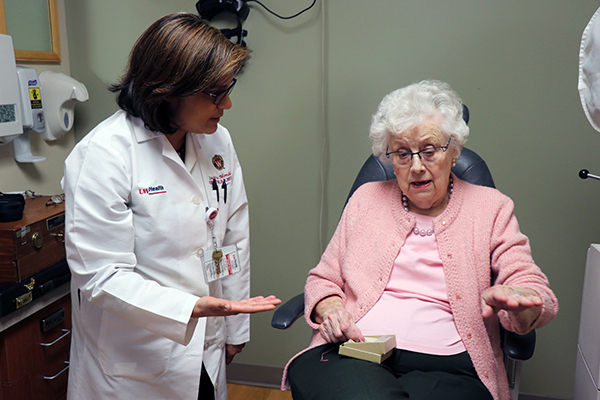
Today, her influence reaches learners at every stage of their careers. She teaches undergraduate, graduate, and medical students, as well as ophthalmology residents and ophthalmic technicians. In addition to introducing them to vision rehabilitation, she has an important goal–sparking interest in eye care as a career field.
“We’re facing a critical national shortage of ophthalmology providers, and the need for ophthalmologists and vision rehabilitation specialists continues to grow,” she said. “I hope my teaching inspires more learners to pursue these careers so we can continue providing timely, high-quality care for patients.”
Dr. Mondal has long been passionate about helping patients with vision loss maintain their independence and quality of life. When the opportunity arose in 2016 to establish a low vision program at UW Health, she embraced the challenge.
Appointed director of low vision services, Dr. Mondal built the program from the ground up, creating a comprehensive vision rehabilitation service to meet the growing needs of her patients. She was promoted to Chief of Vision Rehabilitation Services in 2022.
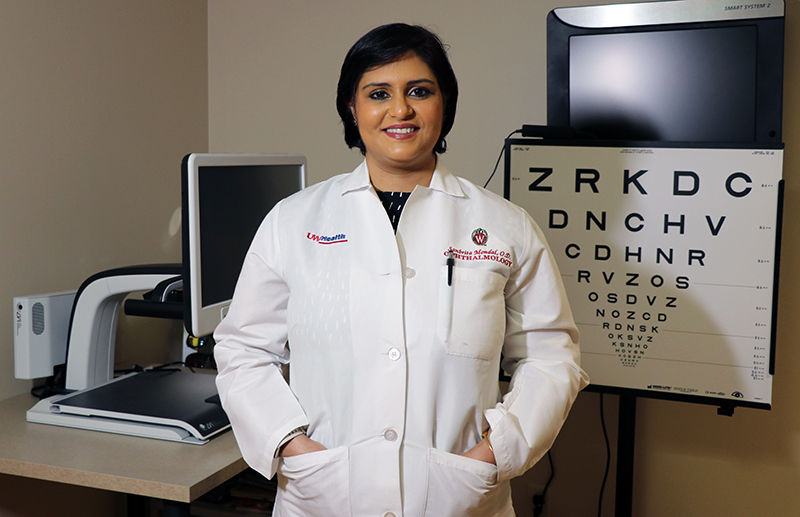
Under her leadership, the clinic has evolved into a multidisciplinary vision rehabilitation service that brings together optometry, occupational therapy, and social work.
“Through this clinic, we have helped thousands of folks from Wisconsin and Illinois live more confidently and independently with their vision loss. This in turn improves compliance as well as follow up with ophthalmology. When I meet new patients who say they were referred to me by a friend or family member, that’s one of the most rewarding compliments I can receive.”
Throughout her career, one lesson has remained at the heart of her practice.
“I learned early in optometry school that patient care is 80 percent chairside manner and 20 percent knowledge,” she said. “Patients will always remember how you made them feel more than what you told them about their diagnosis. It’s important to make people feel heard and to involve them in their own care. It only takes a few extra minutes, but the outcome is always better.”
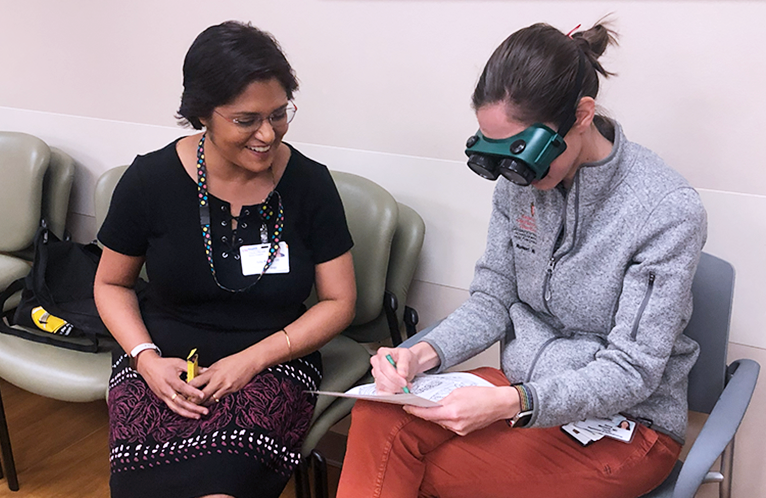
Her hope for the next generation of eye care providers is simple: remember that compassion is just as important as clinical expertise.
“Eye care is a very rewarding career,” she said. “You get to go home knowing that you made a difference in someone’s life that very day. Not all medical careers allow that privilege. So far in my career, every eye care professional I have interacted with has been friendly, kind, and supportive.”
She believes that spirit of collaboration is one of DOVS’ greatest strengths.
“I am very proud to be a member of the DOVS community,” she said. “Our department is one of the few in the nation that truly values the partnership between ophthalmology and optometry. Together, we provide the best possible care for our patients.”