Bradley Lemke, MD, has received the 2026 Distinguished Alumni Award from the University of Wisconsin (UW) Department of Ophthalmology and Visual Sciences (DOVS). The award recognizes Dr. Lemke’s decades of contributions to ophthalmology, ophthalmic plastic surgery, research, and education.
Dr. Lemke will receive the honor October 10 at the DOVS Alumni and Friends reception at the American Academy of Ophthalmology conference in New Orleans.
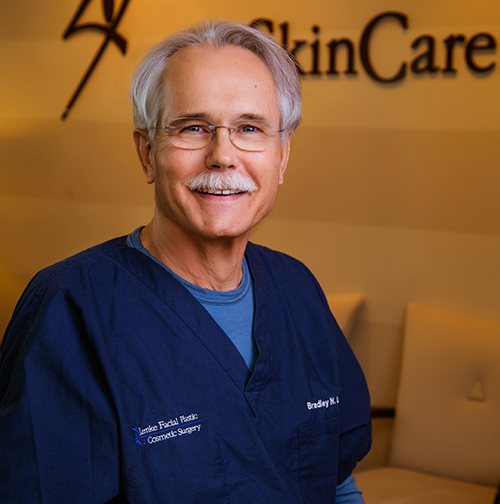
“I am humbled to receive this award,” Dr. Lemke said. “I feel I’m one of many qualified individuals, and it means a lot to feel such a great sense of connection with the group.”
That connection very nearly took a different path.
In 1975, Dr. Lemke was completing his medical rotating internship at UCLA-Harbor General Hospital in Torrance, CA, one year before he was scheduled to return to Wisconsin for his ophthalmology residency at UW–Madison. While rotating on the ENT/Head and Neck service, nearing the end of his internship, he attended a lecture on facial reconstructive surgery.
The lecture changed his career plans.
“That talk electrified me,” Dr. Lemke recalled. “It was the most exciting thing that I had encountered since I started medical school.”
When he was invited to apply to UCLA’s head and neck surgery program, it seemed like a dream come true. He decided to change career fields and stay in California to become a facial reconstructive surgeon.
Then George Bresnick, the UW DOVS residency director at the time, suggested he call Richard Dortzbach, MD to learn about his ophthalmic plastic surgery practice.
“I called Dr. Dortzbach at home to explain my decision,” Dr. Lemke recalled. “It was over the dinner hour. I could hear his kids in the background. But he spent more than two hours on the phone with me, explaining the emerging field of ophthalmic plastic surgery. By the end of the conversation, I had learned that I could pursue facial plastic surgery through ophthalmology. I would come back to Wisconsin as planned.”
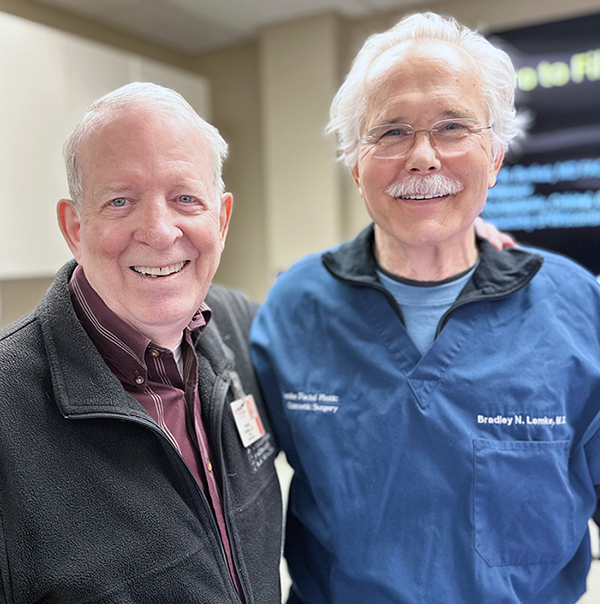
That decision shaped a career spanning more than four decades.
Dr. Lemke completed his ophthalmology residency at UW–Madison in 1979, followed by an American Society of Ophthalmic Plastic and Reconstructive Surgery (ASOPRS) fellowship with Orkan G Stasior in Albany, NY. In 1980, he was recruited to return to Wisconsin and join both the Davis Duehr Clinic and the DOVS clinical faculty. He remained at Davis Duehr Dean Clinic until 2000, when he established Lemke Facial Surgery.
Dr Lemke retired from his part-time DOVS position as Preceptor of the ASOPRS and American Academy of Cosmetic Surgery fellowships in 2003. He remained active in the UW ASOPRS fellowship activities as a Clinical Adjunct Professor until 2026, when he was reappointed to the DOVS faculty as an Honorary Fellow.
Throughout his career, Dr. Lemke has combined clinical care with teaching, research, and advocacy for the role of ophthalmic plastic surgeons in facial surgery. Challenges he encountered early in the field became an impetus for much of his academic work and professional advocacy.
He credits his UW residency experience—and especially its faculty mentors—with helping shape that approach. Burton Kushner, MD, taught him to put the patient first and remember their names. James Allen, MD introduced him to ophthalmic surgery. Richard Appen, MD modeled the value of attention to detail. Dr. Dortzbach involved residents in surgical decision-making, expecting them to come prepared, understand the conditions they were treating, and ask questions.
Dr. Lemke valued the experience so much that he completed two three-month plastic surgery electives during residency, which helped prepare him for fellowship training.
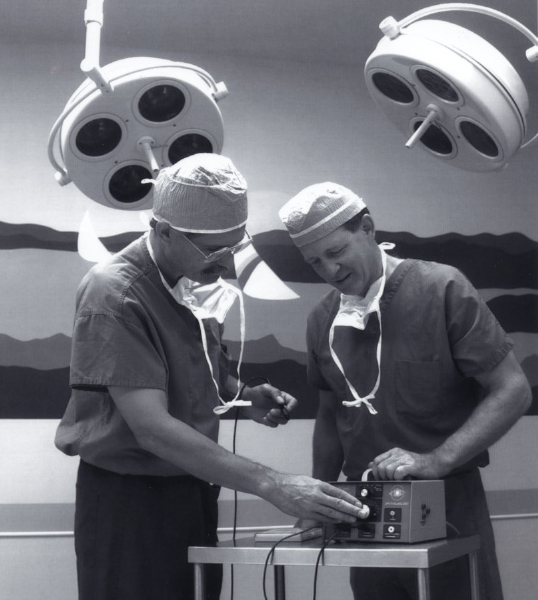
“I am exceedingly grateful to Dr. Dortzbach,” he said. “He was very kind and patient with me. Like the other UW faculty, he treated me like a colleague.”
His working relationship with Dr. Dortzbach continued well beyond residency, as colleagues on the DOVS clinical faculty, as preceptors of the ASOPRS fellowship program, and at the Davis Duehr Clinic.
Drs. Dortzbach and Stasior were both ASOPRS past-presidents and fellowship preceptors in those earlier formative years as the new ophthalmology sub-specialty field developed. Their combined leadership inspired educational, research, and political ASOPRS citizenship in Dr. Lemke.
As 2000 president of ASOPRS, Dr. Lemke fought to establish facial surgery within the ophthalmology scope of practice. Ophthalmologists then were often denied facial surgical privileges by hospital committees. Advocacy involved development of facial surgical curricula in ASOPRS training programs and then promoting that facial surgery competency to the medical and general public.
Dr. Lemke helped develop UW’s oculoplastic fellowship into an elite ASOPRS program that became recognized nationally and internationally. Dr Lemke opened a DOVS orbital/facial anatomy laboratory in 1980. In that laboratory UW fellows participated in anatomic research that resulted in 14 national award-winning projects. Drs. Lemke and Dortzbach developed a surgical anatomy wet lab course for presentation at the AAO, which continues today.
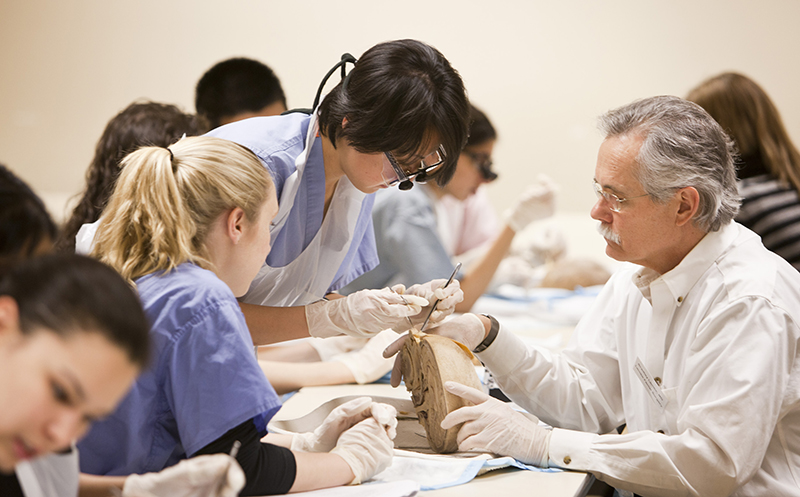
Now, Dr. Lemke encourages today’s residents to bring the same curiosity and independence to their careers.
“Realize, in a humble way, your value, and try to write your own ticket,” he said. “Try to find out what it is that interests you, and pursue that.”
He also encourages residents to choose a place where they genuinely want to live—not simply the job that checks the most boxes.
“You’ll be able to adapt to the situation there, with the incredible skillset you carry with you.”
For Dr. Lemke, that skillset has taken him through a career devoted to patients, teaching, research and the advancement of his specialty. Decades later, his connection to the UW remains as strong as ever.