“Blindness from diabetes is preventable.” ~ Roomasa Channa, MD
A University of Wisconsin–Madison ophthalmologist is tackling one of the biggest barriers to preventing diabetic vision loss: access to timely screening and follow-up care.
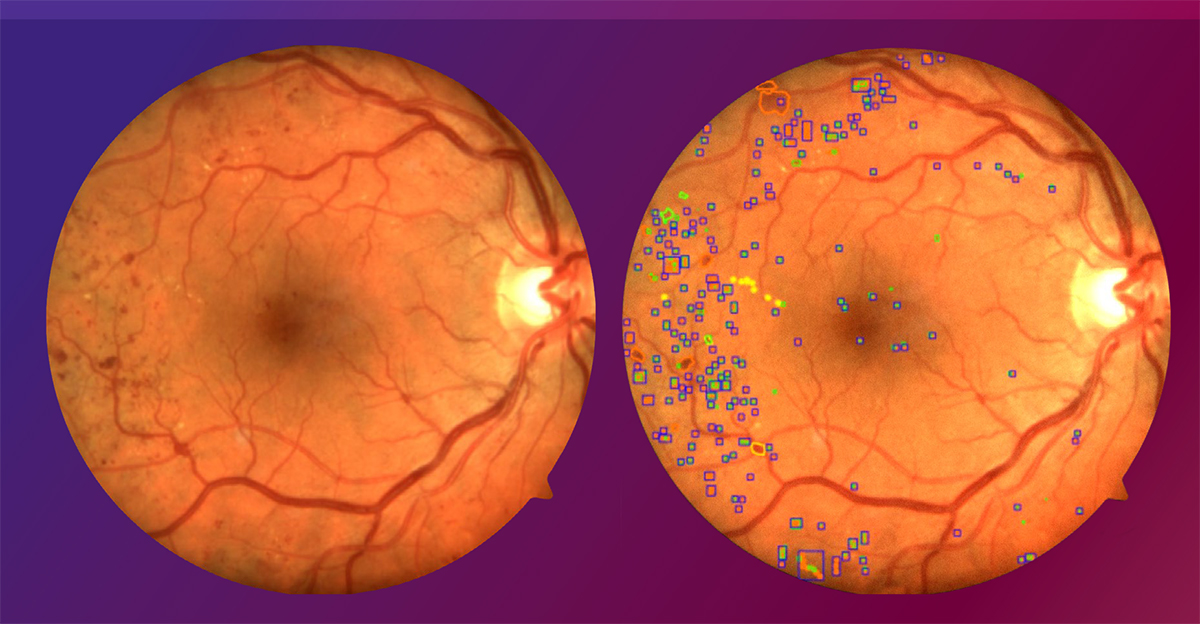
Currently 4 million people in the United States—roughly 40% of patients with type 1 and type 2 diabetes—have diabetic retinopathy (DR). Of those, an estimated 1.84 million are living with damage severe enough to qualify them as legally blind.
Roomasa Channa, MD, is exploring the use of artificial intelligence (AI) to detect eye disease earlier and improve access to care. Dr. Channa is an associate professor in the Department of Ophthalmology and Visual Sciences, a retina specialist with UW Health, and co-director of the artificial intelligence unit at UW—Madison. She is developing a screening approach that not only identifies DR but also helps ensure patients receive timely follow-up care.
“One of my first patients as a trainee on call was a young African American woman who came to the emergency room for sudden vision loss and headaches, thinking it was a migraine,” Dr. Channa recalled. “One of her eyes was full of blood, and the other had the classic findings of advanced diabetic retinal disease. She didn’t even know she had diabetes, despite severely uncontrolled blood sugars. Unfortunately, as my training progressed, I saw many others like her.”
The experience underscored for Dr. Channa how inequities in healthcare can lead to vision loss. It also sparked an important question: Could AI not only increase screening rates but also strengthen follow-up with recommended eye care—ultimately reducing diabetes-related vision loss?
To address this challenge, Dr. Channa developed a screening strategy called AI-BRIDGE (Artificial Intelligence-Based point of caRe, Incorporating Diagnosis, schedulinG, and Education). It integrates detection, patient education and follow-up scheduling into a single workflow.
This eye screening program begins with eye imaging in primary care clinics, where AI analyzes retinal photographs and identifies signs of disease in real time. Patients then receive educational materials about DR that were developed using patient input. When follow-up care is needed, clinic staff help schedule appointments with eye care specialists.
“Approximately 20 percent of diabetes patients screened for eye disease require referral to a specialist for treatment or surgery,” Dr. Channa said. “For these patients, time is of the essence.”
In medically underserved areas, many patients are lost to follow-up once they leave the primary care clinic. Traditional teleophthalmology requires images to be sent to specialists for later review—introducing delays that can make it harder for patients to complete recommended care.
An AI-based teleophthalmology approach shortens that timeline by analyzing images immediately, while the patient is still in the clinic—making it more likely patients receive recommended care.
Dr. Channa’s work has been supported by numerous organizations including the National Institutes of Health (NIH)/National Eye Institute (NEI), the National Aeronautical and Space Association, the Department of Defense, the Johns Hopkins Children’s Center, and Veterans Affairs. Funding includes a five-year, $4.7 million grant from NIH/NEI to test whether the AI-BRIDGE screening strategy improves access to eye care compared to standard approaches for patients with diabetes.
“Everyone deserves access to the best medical expertise our country has to offer,” Dr. Channa said. “Ultimately, this trial will assess whether AI screening technology can decrease the burden of vision loss from diabetes.”