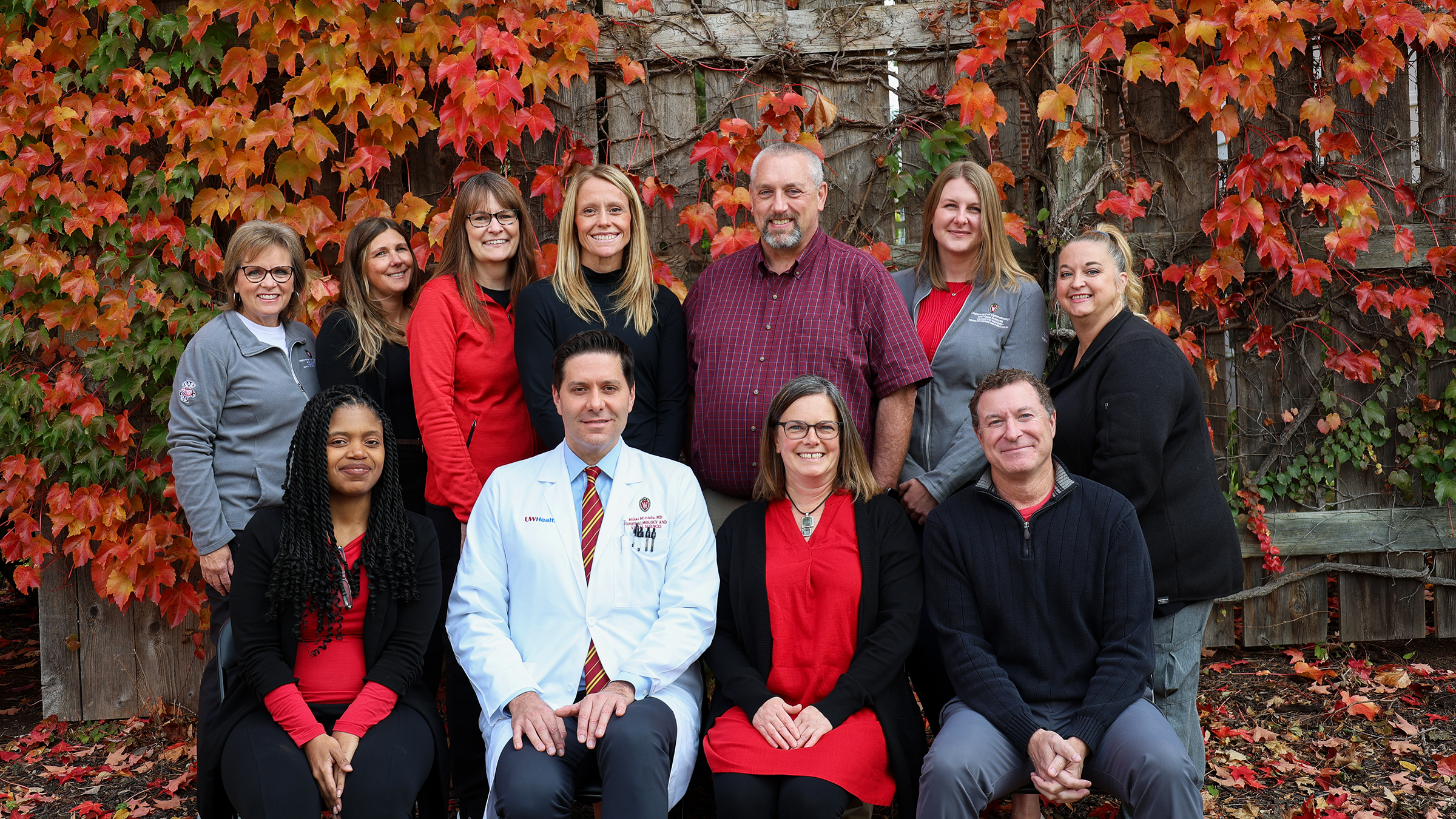
For more than four decades, the Clinical Eye Research Unit (CERU) has helped bring promising vision therapies from the research stage to patients. Today, the unit is expanding its reach, conducting increasingly complex clinical trials and opening new opportunities for patients with sight-threatening conditions.
This past year, CERU has conducted several important trials focused on inherited retinal diseases (IRDs), a group of rare genetic disorders that can lead to progressive vision loss and blindness. Many of these studies are exploring innovative approaches such as gene and stem cell therapies for inherited retinal diseases, as well as new treatments for choroidal and uveal melanoma.
“We’re also seeing a research shift toward novel, systemic therapies for various ophthalmic conditions such as age-related macular degeneration and diabetic retinopathy, including oral and subcutaneous medications, rather than relying solely on ocular treatments such as intravitreal injections.” said CERU Director Mihai Mititelu, MD, MPH, FASRS.
As treatments become more sophisticated, so too does the research required to evaluate them. Today’s ophthalmology clinical trials increasingly require expertise from multiple disciplines. To this end, in order to support the growing complexity and the interdisciplinary nature of ophthalmic trials, the CERU is partnering more frequently with various units across the University of Wisconsin–Madison, including the Pharmacy Research Center and the Departments of Radiology, Rheumatology, Oncology, and Endocrinology.
While vision research remains its primary focus, CERU’s clinical research infrastructure and expertise offer growing support for studies of other medical conditions and therapeutics that may have ocular involvement or side-effects. The unit has broadened its research portfolio, supporting studies in oncology, nephrology, cystic fibrosis, and Alzheimer disease.
Beyond industry-sponsored trials, CERU helps faculty researchers transform their own scientific ideas into clinical studies. The unit provides guidance on study design, regulatory requirements, project management, and funding strategies.
“In 2026, several members of the DOVS research team collaborated to develop a guidebook specifically dedicated to our faculty investigators,” said CERU Manager Angie Adler. “This resource is designed to help researchers navigate the many steps involved in transforming a research idea into a properly funded and well-executed investigator-initiated clinical study.”
The CERU is also helping train the next generation of clinician-scientists. In June 2026, the department launched the inaugural, combined one-year pre-residency research fellowship focused on ophthalmic imaging and clinical research, provided through a partnership between the Wisconsin Reading Center (WRC) and CERU . Through the WRC, fellows have historically gained advanced training in retinal imaging technologies, as well as in grading, data analysis, and interpretation.
“Adding clinical trial exposure and direct participant interaction through the CERU will give learners valuable and unique hands-on exposure to clinical research,” Dr. Mititelu said. “The fellows will develop skills that will help prepare them for future careers in ophthalmology and develop an excellent understanding of clinical research, trials and investigator-initiated projects.”
Together, these efforts reflect CERU’s continued evolution as a leader in clinical research, expanding opportunities for patients, investigators, and future physician-scientists alike.
FY 2025-26 Highlights:
- 16 actively recruiting trials
- 14 ongoing trials
- 15 investigator-initiated projects
- 30 collaborative projects and participation in databases