Some of the most meaningful legacies begin quietly.
They are not built for recognition or accolades, but from the simple conviction that one person can make a difference. Over time, those quiet acts of service can transform communities, shape generations of learners, and improve countless lives.
Thirty years ago, Hugo Higa, MD, planted one such seed.
A 1996 ophthalmology alumnus from the University of Wisconsin Department of Ophthalmology and Visual Sciences (DOVS), Dr. Higa helped found what would become one of the department’s longest-running and most impactful community outreach initiatives: the Right to Sight Clinic.
Its story began with a deeply rooted desire to help people. With the support of faculty mentors Suresh Chandra, MD, and Guillermo de Venecia, MD—who also shared his commitment to underserved populations—Dr. Higa set out to build a clinic focused on patients in need in his community.
Working with local homeless shelters, free clinics, government agencies, and community organizations, Dr. Higa established a referral network and secured partnerships, including ones with Combat Blindness International (CBI) to assist with clinic expenditures and LensCrafters, to provide eyeglasses at no cost.
That original Right to Sight clinic from April 1995 was modest: two ophthalmology residents, one faculty physician, one technician, and approximately 10 patients each month.
From this experience grew an interest in international eye care. In November 1995, Dr. Higa traveled to Vietnam at the invitation of the late Judith Ladinsky, MD, professor of Population Health Sciences at the University of Wisconsin—Madison (UW). There, he conducted eye screenings for local residents and witnessed firsthand both the overwhelming need for accessible eye care and the profound impact volunteer physicians could have.

“My visit reinforced my belief in the need to help the global community,” Dr. Higa said. “But it also confirmed to me that helping those in our community was as, if not more, important. As doctors, it is crucial to provide eye care for everyone. That means looking at our own communities – not just overseas. Global ophthalmology is fantastic— but local ophthalmology, caring for the people in our own community, is just as important.”
Before graduating, Dr. Higa passed the program to the next class of residents—a tradition that has continued uninterrupted for three decades.
Today, the Right to Sight Clinic has grown into a comprehensive community-based program supported by UW Health and DOVS. Faculty, ophthalmology residents, medical students, technicians, schedulers, opticians, and community donors work together to provide care. Rather than a single monthly clinic, the program now operates as multiple clinics throughout the year, culminating in a large annual clinic capable of serving as many as 70 patients in a single day.
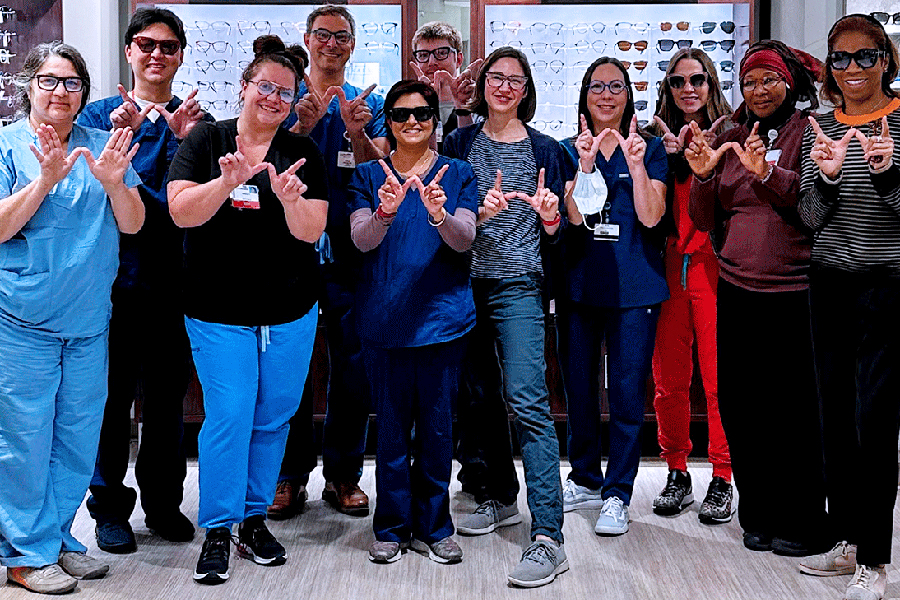
Bonnie Vergas, an ophthalmic technician with UW Health, was one of the clinic’s earliest supporters.
“I’ve been fortunate to participate in many international eyeglass missions over the years,” Bonnie said, “and those experiences inspired me to help address eye care needs within our own community. Dr. Hugo Higa had already built an incredible resident-run clinic, and I wanted to offer additional support so we could reach as many patients as possible. By also providing free eyeglasses, we removed a major financial burden and helped patients receive the care they needed.”
The impact has been extraordinary.
Since its founding, the clinic is estimated to have cared for more than 2,750 patients who otherwise may have gone without sight-saving treatment. In the last 10 years alone, volunteers have provided eye care to 893 uninsured adults and distributed more than 320 pairs of eyeglasses.
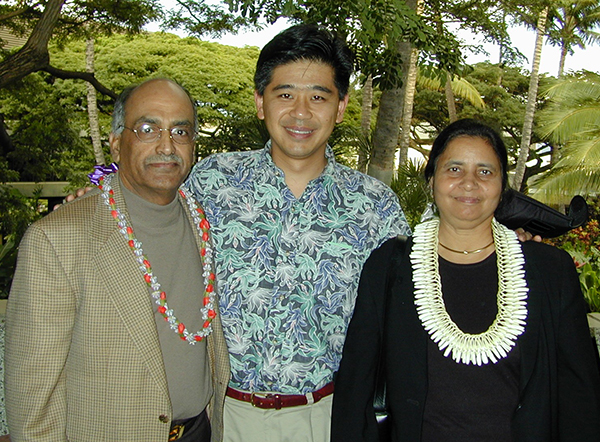
For Daniel Knoch, MD, the clinic’s impact reaches well beyond those numbers.
As Vice Chair of Education and Faculty Development, Dr. Knoch has watched it become a cornerstone of ophthalmology training at the UW.
“By helping found our department’s first Right to Sight Clinic,” Dr. Knoch said. “Dr. Higa established a legacy that remains one of our department’s most enduring community service initiatives. It has shaped generations of trainees and strengthened our department’s enduring commitment to service, compassion, and community engagement.”
Dr. Higa believes the clinic’s success has always depended on one thing: people willing to give their time.
“It was always a volunteer clinic,” he said. “I cannot thank Dr. Knoch, the residents, and the staff enough for their willingness to dedicate their time – and to continue to do so after all these years.”
Dr. Higa is quick to point out that the clinic’s success belongs to many people. Among them is Andrew Thliveris, MD, PhD, who followed him as a resident and later served as the department’s Vice Chair of Resident Education. Under Dr. Thliveris’ leadership, the Right to Sight Clinic continued to grow while remaining true to its founding mission.
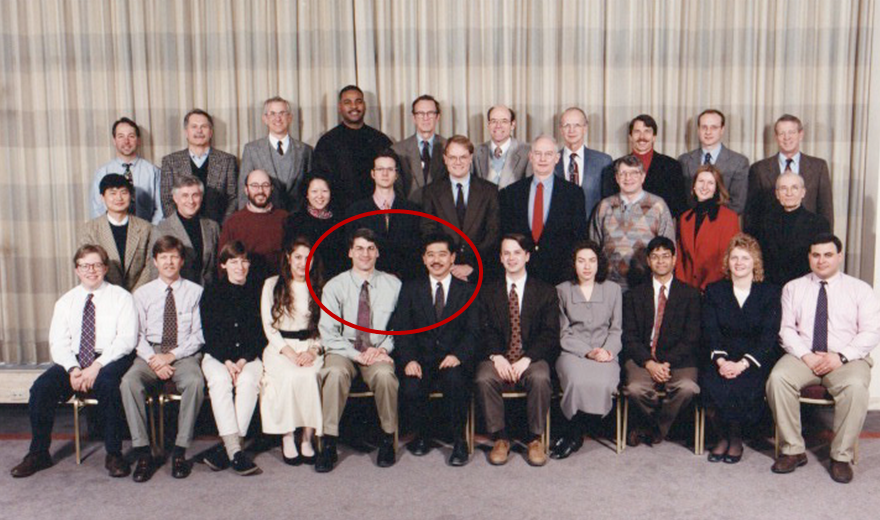
His work was followed by that of Anna Momont, MD, who is the current Vice Chair of Resident Education. Dr. Momont, who served as physician leader for nearly a decade, established many of the processes utilized today, including ensuring faculty coverage for the clinic, determining resident assignments, and developing a formal memorandum of understanding with CBI.
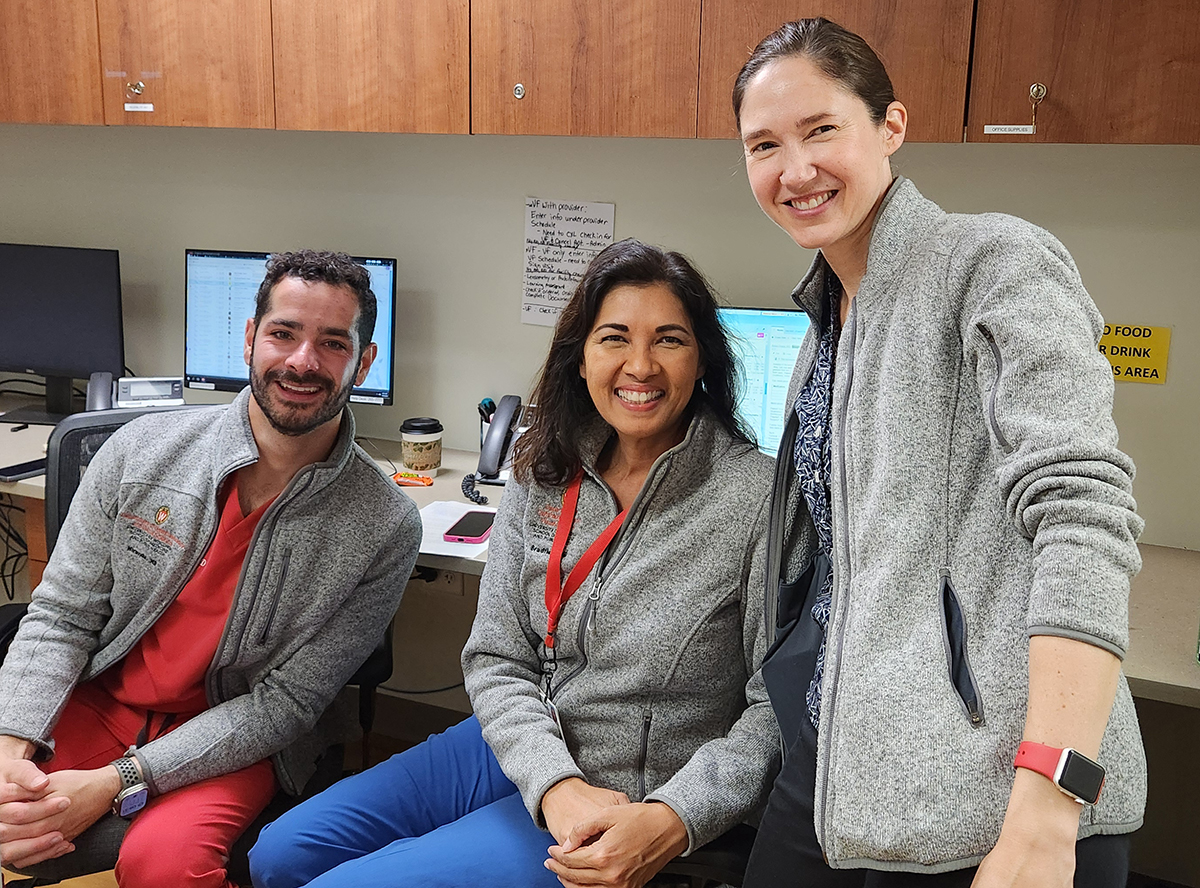
Today, Abigail Jebaraj, MD serves as the clinic director.
“We are incredibly grateful for the foundational work of Dr. Higa in establishing this clinic, creating opportunities for our ophthalmology residents, attendings, and staff members to care for those most in need of vision care,” said Dr. Jebaraj. “His legacy of humanitarianism and volunteer service continues to inspire us, and we are honored to carry it forward.”
DOVS honored Dr. Higa at its graduation ceremony in June by establishing an inaugural award bearing his name.
“To acknowledge his remarkable legacy, we are thrilled to establish the Hugo Higa Hidden Hero Award,” Dr. Knoch said. “This award will recognize future generations of individuals who embody the same spirit of humility, leadership, service, and commitment to improving access to eye care. Its purpose is to recognize someone – faculty, support staff, or alumni – who have done extraordinary work but remain in the shadows.”